Why Group Therapy Can Feel Easier Than Starting Alone for Adults in California, Maryland
For some adults, the hardest part of getting help is not deciding that support might be useful. It is picturing the first conversation. A one-to-one appointment can feel intense when someone already feels overexposed, emotionally tired, or unsure how to explain what has been going on. Group therapy can sometimes feel more approachable because the pressure is distributed differently. No one has to arrive with a perfect summary, a polished story, or the exact right words on day one.
For adults in California, Maryland, group therapy may offer a structured outpatient setting where listening, relating, and gradual participation become part of the support process. HelpStars LLC works with adults who may need more connection, more routine, and a steadier place to practice speaking honestly about stress, mood changes, relationships, or daily-life strain.
Sometimes the First Barrier Is Not Motivation. It Is Exposure.
Many adults delay treatment because they imagine they will have to explain everything immediately. That expectation alone can keep someone stuck. A private session can be extremely valuable, but it is not the only way to begin. In a well-structured group, adults may enter the room first as listeners, then as participants, and eventually as people who notice that their own experiences make more sense in the presence of others.
That shift matters. Feeling less alone can lower the emotional cost of getting started. Instead of sitting under a spotlight, a person may find themselves in a setting where shared themes already exist: stress that keeps building, communication that has become harder, routines that are slipping, or a sense that life has narrowed without one dramatic event causing it.
Why a Group Setting Can Change the Pressure
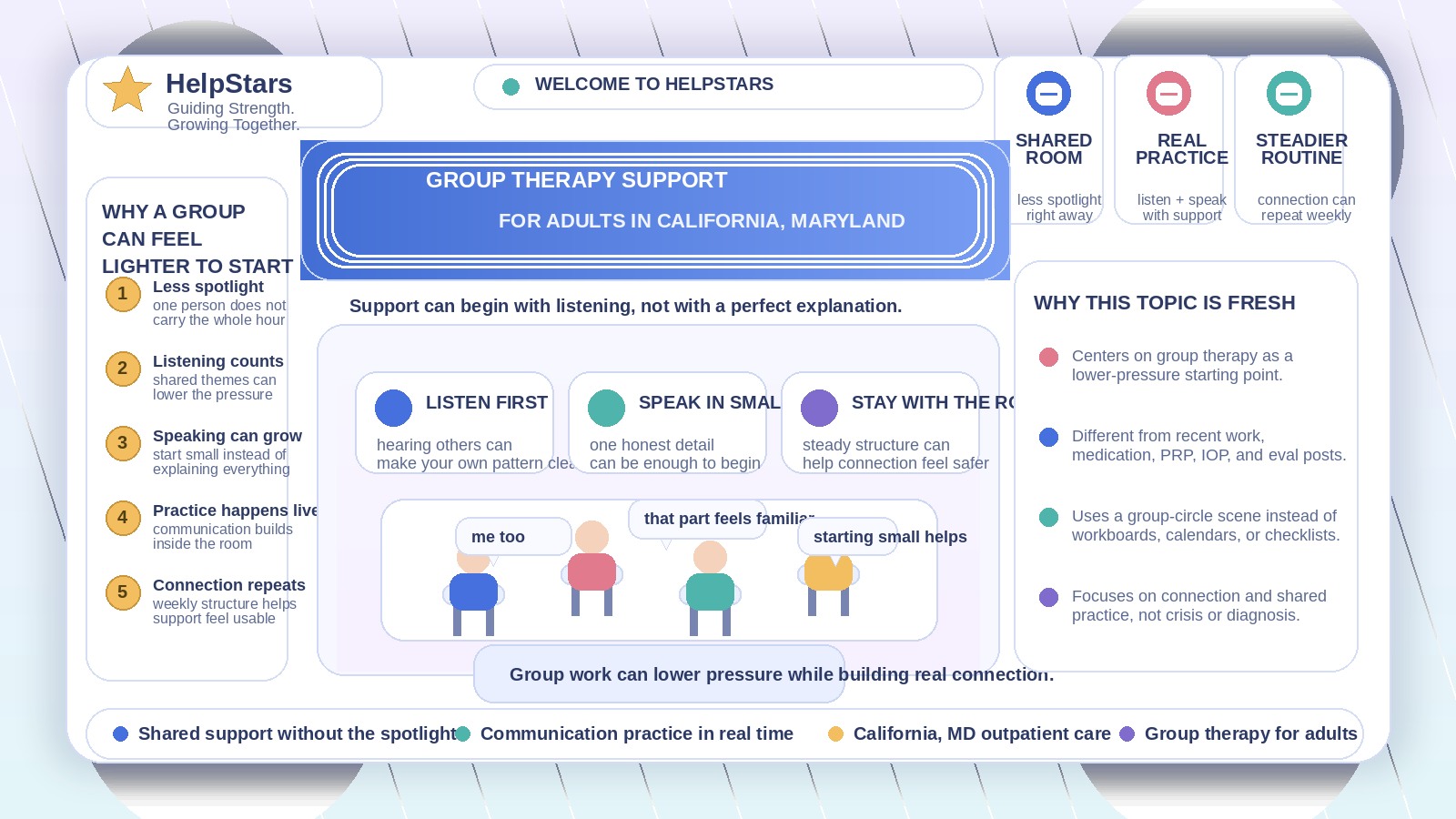
Group therapy does not work because everyone has the same story. It works because many adults benefit from structure, reflection, and perspective that develop in a shared therapeutic space. The room itself can reduce some of the pressure people expect from treatment.
- There is less pressure to carry the whole hour alone. One person does not have to generate every topic or explain every detail.
- Listening can be part of the work. Adults often recognize their own patterns more clearly while hearing someone else describe a similar struggle.
- Participation can grow gradually. Speaking once, even briefly, may feel more manageable than trying to tell an entire story from the start.
- Practice happens in real time. Skills like naming feelings, setting boundaries, tolerating discomfort, and responding thoughtfully can develop inside the group itself.
For adults who feel rusty with connection, wary of judgment, or unsure where to begin, that structure can make the first step feel more realistic.
What Adults May Gain From Group Therapy
The benefits of group therapy are not limited to “feeling supported,” though that matters. Many adults use group work to strengthen practical parts of daily functioning that become harder when emotional strain keeps accumulating.
Depending on the group format and the person’s needs, benefits may include:
- hearing new ways to understand a repeating problem,
- building comfort with honest communication,
- practicing how to respond without shutting down or overexplaining,
- seeing that difficult emotions can be discussed without everything escalating,
- rebuilding consistency by having a regular therapeutic routine, and
- developing a stronger sense that progress does not have to happen in isolation.
That can be especially meaningful for adults who have spent months holding everything internally while still trying to keep up with work, family, appointments, or household demands.
A First Group Session May Feel More Structured Than People Expect
Some adults avoid group therapy because they imagine being pushed to share deeply with strangers right away. In practice, a quality outpatient group is usually more structured and more paced than that assumption suggests. There may be a topic focus, therapist guidance, boundaries around participation, and a format that helps conversations stay useful rather than chaotic.
An early session may include simple tasks such as listening for themes, identifying what feels familiar, noticing emotional reactions, or contributing one small observation. That can be enough. Group therapy does not require instant vulnerability. It often works by helping adults build tolerance for being present, thoughtful, and more open over time.
Who Might Consider This Kind of Support
Group therapy may be worth discussing for adults who:
- feel isolated even when they are still managing responsibilities,
- struggle to put emotional stress into words in one-to-one settings,
- want support but feel intimidated by being the only person talking,
- notice repeated patterns in relationships, stress responses, or communication, or
- would benefit from a regular outpatient structure that supports reflection and connection.
It is not the right fit for every person or every moment. The main point is that outpatient mental health care does not have to begin in only one format. For some adults in California, Maryland, group therapy can be the more reachable entry point.
Questions Adults Often Ask Before Joining a Group
Do I have to talk a lot in the first session?
Not necessarily. Many adults begin by listening, observing the pace of the room, and sharing only a small amount at first.
What if my situation feels different from everyone else’s?
People in a group do not need identical lives for the work to be meaningful. Shared themes such as stress, isolation, overwhelm, communication problems, or emotional fatigue often matter more than matching details.
Can group therapy still help if I am private?
Yes. Privacy and thoughtful pacing are not barriers to good group work. Many adults participate carefully at first and become more comfortable as trust and structure build.
Is group therapy only for people in crisis?
No. Some adults explore group therapy before things reach a crisis point because they want more support, more perspective, or a steadier outpatient routine.
Why Local Access Matters in California, Maryland
When emotional energy already feels limited, convenience matters. Adults in California and across St. Mary’s County often balance work schedules, family obligations, driving, and the everyday mental load of trying to stay functional while under strain. A local outpatient option can make participation more realistic and more repeatable.
That consistency matters because therapy often helps through rhythm as much as insight. A support format that someone can actually keep attending is usually more valuable than an ideal plan that becomes too difficult to maintain.
You Do Not Need the Perfect Story Before You Start
Many adults wait for the “right time” to seek help, imagining they should first organize their thoughts, calm down, or know exactly what kind of support they need. Group therapy can interrupt that delay. It offers a place where showing up, listening, and starting small are already meaningful forms of participation.
For adults in California, Maryland, group therapy may provide a practical outpatient path toward stronger connection, clearer communication, and more steady emotional support. Starting does not require a perfect explanation. It may simply require a setting that makes the first step feel lighter.