When a Good Job Lead Still Sits Unanswered: Supported Employment for Adults Serving Calvert County, Maryland
Sometimes the most discouraging part of a job search happens after something goes right. An employer writes back. A voicemail comes in. A request for a phone screen lands in the inbox. From the outside, this should be the easy part. But for some adults, that small sign of interest can make the whole process feel suddenly more real, more exposed, and harder to answer than the original application ever was.
For adults seeking supported employment serving Calvert County, Maryland, the barrier is not always finding openings. Sometimes it is responding once an opportunity starts moving. A promising lead may sit starred, reread, and unanswered while the person tries to calm anxiety, organize their schedule, figure out what to say, and stop one email from turning into a much bigger question about readiness.
HelpStars LLC supports adults across Southern Maryland with compassionate behavioral health and employment-focused services. When a callback, email, or interview request keeps stalling instead of becoming action, supported employment may help break the next step into something more manageable.
Why a Positive Reply Can Create Its Own Kind of Pressure
Before an employer responds, the job search can stay somewhat abstract. A person can browse listings, imagine possibilities, and tell themselves they will apply again soon. Once an employer actually reaches out, the pressure changes. Now there is a real person waiting, a real timeline, and a real chance that the next decision could affect the next several weeks of life.
That moment can sound like:
- “I wanted a response until I got one,”
- “The email is good news, but now I feel behind already,”
- “I do not know why sending one short reply feels so hard,”
- “If I answer, this becomes real, and that suddenly scares me,” or
- “I keep opening the message and closing it without doing anything.”
These reactions do not always mean someone lacks interest in working. Often, they mean the opportunity has activated several tasks at once: answering professionally, checking availability, thinking about transportation, managing nerves, and imagining what happens if the process continues. One message can start feeling much larger than one message.
The Opportunity Starts Asking for More Than Hope
A callback or interview email may look simple to other people, but it often brings a chain of follow-up decisions with it. If the employer wants a phone screen, the person may start worrying about tone, timing, and what to say if they freeze. If the employer suggests interview windows, the person may suddenly realize they have to think through transportation, household responsibilities, treatment appointments, childcare, or energy levels across the rest of the week.
That is one reason this stage can feel more emotionally loaded than the application itself. The application asks, “Do you want to try?” The employer reply starts asking, “Can you answer quickly, stay organized, and picture yourself inside this opportunity?” For adults managing anxiety, depression, low confidence, attention difficulties, trauma-related stress, or disrupted routine, that shift can create a burst of avoidance right when progress should be building.
Without support, the pattern may repeat like this:
- the person sees the message and feels hopeful for a moment,
- they wait because they want the reply to sound right,
- the waiting starts to feel embarrassing,
- they avoid opening the message again because it now carries pressure, and
- the opportunity begins to feel lost before the person has even fully answered it.
That spiral is painful because the person may look passive from the outside while internally working very hard just to regulate enough to respond.
How Supported Employment Can Help After an Employer Reaches Out
Supported employment is not only about getting hired or keeping a job once it starts. It can also help at the exact point where employer interest arrives and follow-through becomes harder than expected.
Depending on the person’s needs, support may help with:
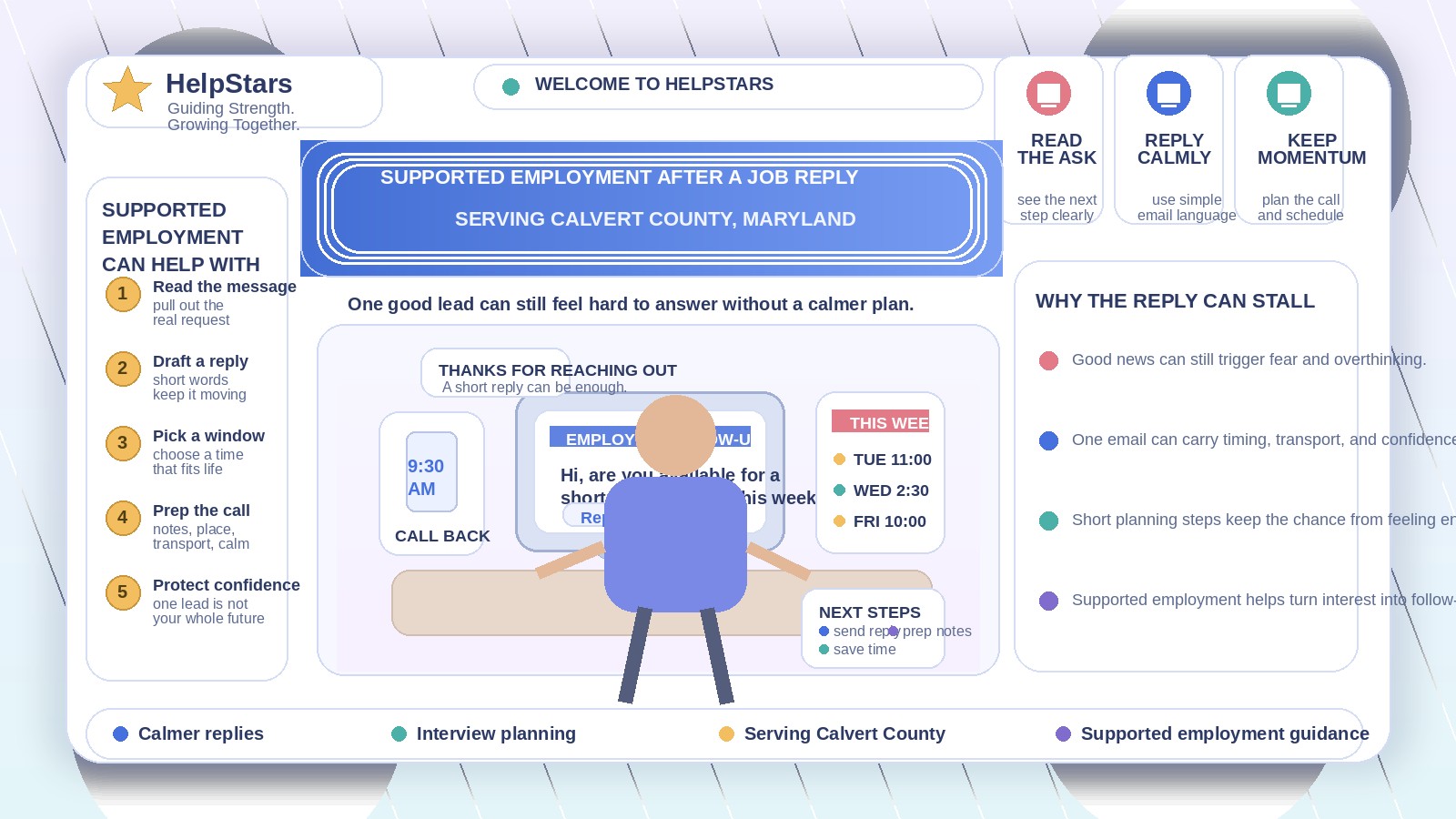
- reading the employer message carefully and identifying the exact next step being requested,
- drafting a short reply that sounds clear and professional without overthinking every line,
- choosing realistic interview windows based on treatment, transportation, or family responsibilities,
- building a small checklist for voicemail, email, documents, clothes, directions, and reminders,
- preparing for the emotional drop that can happen after sending the reply, and
- keeping one good lead from turning into all-or-nothing pressure about the future.
The goal is not to force confidence that is not there. The goal is to create enough structure that the next step becomes doable before anxiety can turn it into something much larger.
A Calvert County Example: The Email Gets Flagged but Not Sent Back
Imagine an adult serving Prince Frederick, Lusby, Huntingtown, Chesapeake Beach, North Beach, Solomons, or another Calvert County community who finally applies for a role after weeks of hesitation. Maybe the person picked a posting that felt realistic. Maybe the hours seemed manageable. Maybe returning to work has started to feel possible again.
The next afternoon, an email arrives from the employer asking whether the person is available for a brief phone conversation and suggesting two time windows. Nothing about the message is harsh. In fact, it is encouraging. But the person’s body does not read it that way. Their thoughts start jumping ahead: What if I sound awkward? What if they ask about a gap? What if I pick a time and then panic? What if this becomes another thing I cannot follow through on?
So the email gets starred instead of answered. Later, the person rereads it and decides they should wait until they can think more clearly. By the next morning the reply feels overdue. Now there is shame mixed in with the original anxiety, and the chance feels even harder to touch.
This is where mental health job support serving Calvert County can matter. The issue is not simply motivation. The issue is that a normal next step has become tangled with fear, timing, self-doubt, and executive overload. A better structure can help untangle it before the lead quietly disappears.
Five Practical Moves That Can Turn Employer Interest Into Forward Motion
- Name the exact ask before reacting to the whole future. Many adults feel flooded because they respond to the imagined meaning of the opportunity instead of the specific task in front of them. The first task may only be confirming a phone time or replying with basic availability.
- Draft the simple reply before trying to draft the perfect reply. One short, respectful message is often enough to keep momentum alive. Perfectionism can become another form of avoidance when the person is already anxious.
- Choose times that fit the real week, not the ideal week. It helps to consider transportation, counseling, medication routines, energy patterns, household responsibilities, and recovery needs before agreeing to an interview window.
- Prepare for the step after the reply. Sometimes sending the message is only half the stress. A person may need a plan for voicemail, notes, clothing, directions, or a quiet place for a call so the next contact does not restart the spiral.
- Keep one lead in proportion. A good opportunity matters, but it does not need to become proof that the whole future will either work or fail. Supported employment can help keep the moment important without making it emotionally enormous.
These moves sound small, but they often make the difference between a response that happens today and an opportunity that stays stuck in draft form until it closes.
In Calvert County, Timing Still Changes the Math
Adults serving Calvert County are often making employment decisions inside a very real weekly structure. Travel between communities, family obligations, appointment schedules, childcare, shared vehicles, and fluctuating energy can all affect what kind of job follow-up is realistic. A phone screen at the wrong time of day may be harder than it looks on paper. An interview across the county may require more planning than an employer realizes.
That context matters. A person may not need vague encouragement to “just answer the email.” They may need help translating employer interest into a response plan that fits their actual life. Supported employment can be useful precisely because it connects the job step to the routine the person is really living, not the routine they wish were easier right now.
Questions Adults Often Ask About Replying to Job Leads
What if I already waited longer than I meant to?
That does not automatically mean the opportunity is gone. In many situations, a short professional reply is still worth sending. Support can help the person move away from embarrassment and back toward action.
Do I need to explain my mental health situation if I am slow to answer?
No. Most adults do not need to share personal health details in a follow-up message. The reply usually works better when it stays brief, respectful, and focused on the next step.
What if phone calls are much harder for me than email?
That still matters. Some adults need help preparing notes, choosing a better time window, or practicing how to handle a short screening conversation more calmly.
Can supported employment help even if I am not hired yet?
Yes. Support can be helpful before hiring, especially when the main barrier is getting from application to response to interview without losing momentum to anxiety or overload.
A Steadier Response Can Be the Next Win
Many adults do not need more pressure after an employer reaches out. They need a calmer structure for turning interest into movement. A promising lead does not have to become another source of shame or avoidance. With the right support, one short reply can become the start of a more workable employment path.
HelpStars LLC serves adults across Southern Maryland with compassionate behavioral health and employment-focused services. For adults seeking supported employment serving Calvert County, Maryland, help with follow-through, job communication, and next-step planning may be a valuable place to begin.