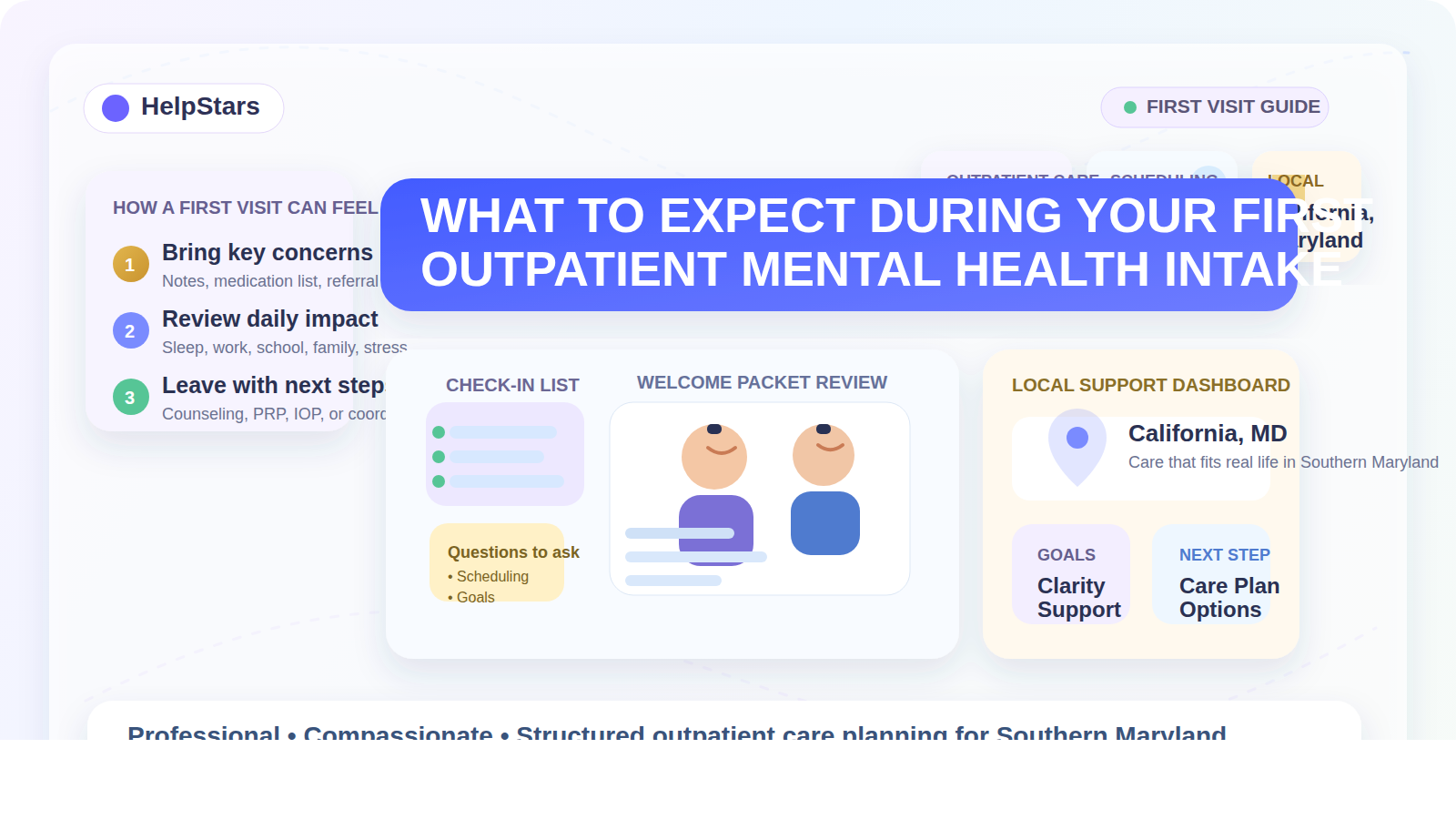
What to Expect During Your First Outpatient Mental Health Intake Appointment in California, Maryland
For many people, the hardest part of starting care is not the appointment itself. It is the uncertainty beforehand. You may wonder what you will be asked, whether you need to share everything at once, or how to explain what has been feeling difficult lately. If you are looking for outpatient mental health care in California, Maryland, it can help to know that a first intake appointment is usually designed to create clarity, not pressure.
An outpatient mental health intake is the starting point for understanding your needs, your goals, and what kind of support may fit your life right now. At HelpStars LLC, that process can help adults, teens, families, and referral partners take a more informed next step toward care in St. Mary’s County and nearby Southern Maryland communities.
Why the First Appointment Often Feels Bigger Than It Is
People commonly arrive at a first appointment carrying two concerns at once: the stress that led them to seek support and the fear of not knowing what will happen next. That is normal. A good intake process is meant to reduce confusion, organize important details, and begin building a plan that feels realistic.
You do not need to have the perfect words. You do not need a polished timeline. You do not need to solve everything in one visit. The purpose of the appointment is to begin a conversation that helps the care team understand what has been happening and what kind of outpatient support may help.
Before You Arrive: A Simple Preparation Checklist
Some preparation can make the visit feel more manageable. Before an intake appointment, it may help to gather:
- A short list of the main concerns you want to discuss
- Any current medications, if applicable
- Recent treatment history, including therapy, hospital care, or community-based services
- Questions about scheduling, treatment options, or next steps
- Insurance or referral information if that applies to your situation
If you feel overwhelmed, even writing down three things can help: what feels hardest right now, what you hope will improve, and what kind of support you are looking for.
What Usually Happens During an Intake Appointment
Every provider has its own workflow, but most outpatient mental health intake visits cover a few core areas. You may be asked about current symptoms, recent stressors, mood patterns, sleep, concentration, relationships, work or school functioning, substance use, safety concerns, and previous mental health treatment. The goal is not to judge you. It is to build a fuller picture of what daily life has been like.
You may also talk through practical factors that affect treatment, such as transportation, family responsibilities, work hours, or other barriers that can shape what kind of care is sustainable. That matters because the best plan is not only clinically appropriate. It also needs to be workable in real life.
Questions You May Hear and Why They Matter
Some intake questions can feel personal, especially when they involve trauma history, past treatment, or changes in functioning. These questions are typically meant to identify patterns, not to rush you. Common themes include:
- When the current difficulty started and whether it has been getting worse
- How symptoms are affecting daily routines, relationships, or responsibilities
- What has helped before and what has not
- Whether you already have supports at home, in school, at work, or in the community
- What you want treatment to help you do differently in everyday life
Those answers can help the care team understand whether weekly outpatient therapy, additional rehabilitation support, more structured programming, or family involvement may be worth discussing.
How a Care Plan Starts Taking Shape
By the end of an intake visit, many people want one thing most of all: a clearer sense of direction. Depending on the situation, that may mean beginning outpatient mental health counseling, discussing psychiatric rehabilitation support, considering a higher level of care such as an Intensive Outpatient Program, or identifying other local resources that match the person’s needs.
That does not mean every service is right for every person. It means the intake helps sort out what level of support appears most appropriate based on symptoms, functioning, goals, and day-to-day demands. For some people, the right answer is steady outpatient care. For others, the next step may involve broader coordination or a more structured schedule.
Why Local Context Matters in California and St. Mary’s County
Mental health treatment planning works better when it reflects the realities of local life. People in California, Maryland may be balancing long commutes, caregiving duties, school demands, shift work, or transportation challenges across St. Mary’s County, Lexington Park, Leonardtown, and nearby communities. These practical details can shape whether a treatment plan is realistic enough to maintain.
Local access matters for another reason too: continuity. When support is close enough to attend consistently, people are often better positioned to follow through with treatment, build rapport, and stay engaged in care over time.
A Good First Visit Should Leave You With More Clarity
A first intake appointment does not need to answer every question in one sitting. It should, however, leave you with a better understanding of what you are experiencing, what kinds of outpatient support may fit, and what the next step could look like. If you have been putting off care because the process feels uncertain, learning what to expect can make that first call or first visit feel more manageable.
HelpStars LLC supports outpatient behavioral health needs in California, Maryland and surrounding Southern Maryland communities with a professional, compassionate approach to care planning and service coordination. Starting with a thoughtful intake can make the path forward easier to see.