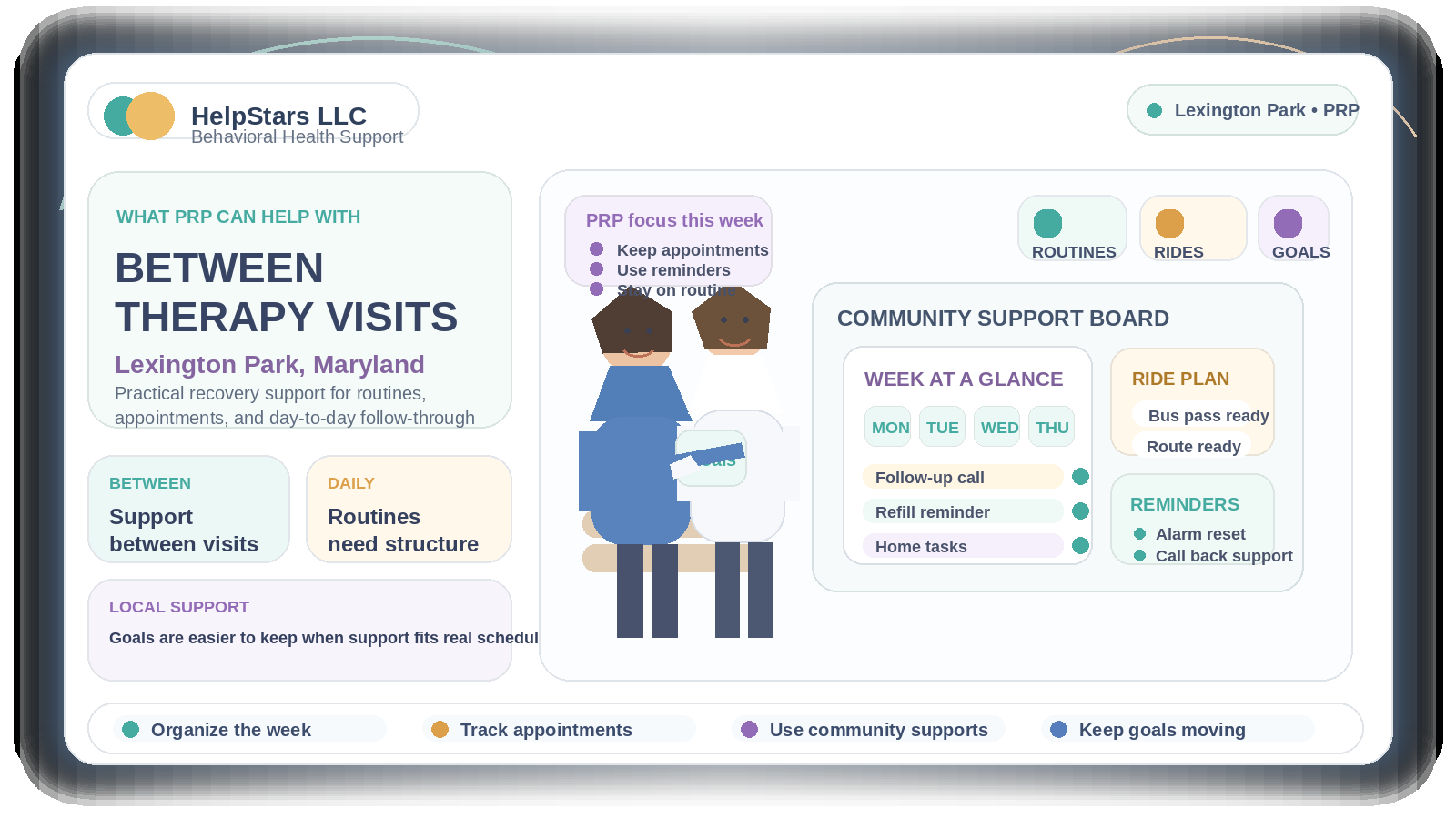
What a Psychiatric Rehabilitation Program Can Help With Between Therapy Visits in Lexington Park, Maryland
A weekly counseling appointment can be valuable, but many adults struggle in the hours and days between visits. A plan may sound clear in session, then real life takes over. Refill reminders get missed. Transportation falls through. A phone call feels too hard to return. The apartment becomes harder to manage. By the next appointment, the same practical barriers are still getting in the way. In Lexington Park and nearby Southern Maryland communities, that gap is often when people begin asking what a Psychiatric Rehabilitation Program, or PRP, actually helps with.
PRP is designed for adults who need more day-to-day behavioral health support than a single weekly visit can provide. It is not the same as a hospital program, and it is not simply another talk-therapy session. Instead, PRP focuses on recovery-oriented support tied to daily functioning, routines, community living, and follow-through. For adults in Lexington Park who are trying to stay organized between appointments, PRP can offer practical structure around the goals that matter most.
When the Hardest Part Is Not the Appointment, but Everything After It
Many adults already know they need support. The problem is not always deciding to get help. The problem is carrying a plan through the week when symptoms, stress, disorganization, isolation, or low energy keep interrupting it. Someone may leave therapy wanting to improve sleep, keep appointments, follow a routine, or reconnect with responsibilities, but still feel unsure how to make those goals hold up in everyday life.
That is where PRP can be worth exploring. It addresses the practical side of recovery: the places where intentions are good, but consistency keeps breaking down.
What PRP Often Helps Adults Manage Between Visits
Adults in Lexington Park looking into psychiatric rehabilitation services are often trying to improve areas such as:
- Keeping track of behavioral health, medical, or community appointments
- Building daily routines around sleep, meals, hygiene, and household tasks
- Following through on forms, calls, reminders, and basic administrative tasks
- Using transportation and community resources more consistently
- Staying connected to treatment goals outside the therapy office
- Reducing the cycle of falling behind, catching up, and falling behind again
These needs are not small. When they go unaddressed, even motivated adults can start feeling stuck. PRP can provide practical reinforcement around the habits and supports that help a week become more manageable.
How PRP Differs From Weekly Counseling Alone
Outpatient mental health counseling is often centered on emotional processing, coping strategies, symptom awareness, and treatment planning. PRP adds a more hands-on layer focused on functioning in real life. The goal is not to replace counseling. It is to support what happens after the appointment ends.
For example, therapy may help a person identify why mornings keep unraveling or why appointments are being missed. PRP can help translate that insight into a more usable routine, step-by-step reminders, practical accountability, and day-to-day recovery goals that feel realistic instead of overwhelming.
Signs Someone May Benefit From Added Day-to-Day Support
Not every adult needs PRP, but it may be worth asking about when the same functional barriers continue week after week. A few examples include:
- Missing important appointments even when the person wants to attend
- Difficulty maintaining structure at home without outside support
- Repeatedly losing momentum between therapy visits
- Trouble organizing next steps after care plans are discussed
- Needing more support with community living skills and follow-through
These patterns do not mean someone is failing treatment. They may simply mean the current support level is too limited for what daily life is asking of them right now.
Examples of Recovery-Focused Goals PRP Can Support
Psychiatric rehabilitation is often most useful when goals are concrete. Depending on the adult and the treatment plan, support may focus on:
- Creating a weekly schedule that is realistic enough to keep using
- Improving consistency with medication-related appointments or refill coordination
- Strengthening communication with providers and support systems
- Practicing routines that make shopping, errands, or household tasks easier to complete
- Reconnecting with community resources that support stability and recovery
That practical focus matters because recovery is often built through repeated daily actions, not one perfect breakthrough.
Why This Can Matter for Adults in Lexington Park
Life in Lexington Park can involve shift work, transportation limits, parenting responsibilities, disability paperwork, court obligations, medical appointments, and travel across St. Mary’s County. When those demands stack up, it can become difficult to hold onto treatment goals without more structured support. A local PRP option may help make care feel usable instead of aspirational.
Consistency often improves when services are close enough to everyday routines, flexible enough to match real barriers, and connected to the community where a person is already trying to function.
Questions to Ask When Exploring PRP Services
Adults and families sometimes hesitate because PRP sounds unfamiliar. Helpful early questions may include:
- What kinds of daily functioning goals does PRP usually address?
- How does PRP work alongside outpatient counseling or other treatment?
- Would added support between appointments make current goals more realistic?
- What local responsibilities or barriers are making follow-through hardest right now?
Those questions can help clarify whether psychiatric rehabilitation is a good fit, especially when the challenge is less about willingness and more about consistency.
A More Structured Week Can Be a Meaningful Recovery Step
Many adults do not need a dramatic change in care. They need steadier support between appointments so treatment plans have a better chance to hold up in ordinary life. PRP can be a useful next step when routines, organization, and daily follow-through have become the missing pieces.
HelpStars LLC provides compassionate behavioral health support for adults in Lexington Park, St. Mary’s County, and surrounding Southern Maryland communities. When weekly appointments are not enough to carry recovery goals through the rest of the week, a Psychiatric Rehabilitation Program may offer the added structure needed to move forward more confidently.