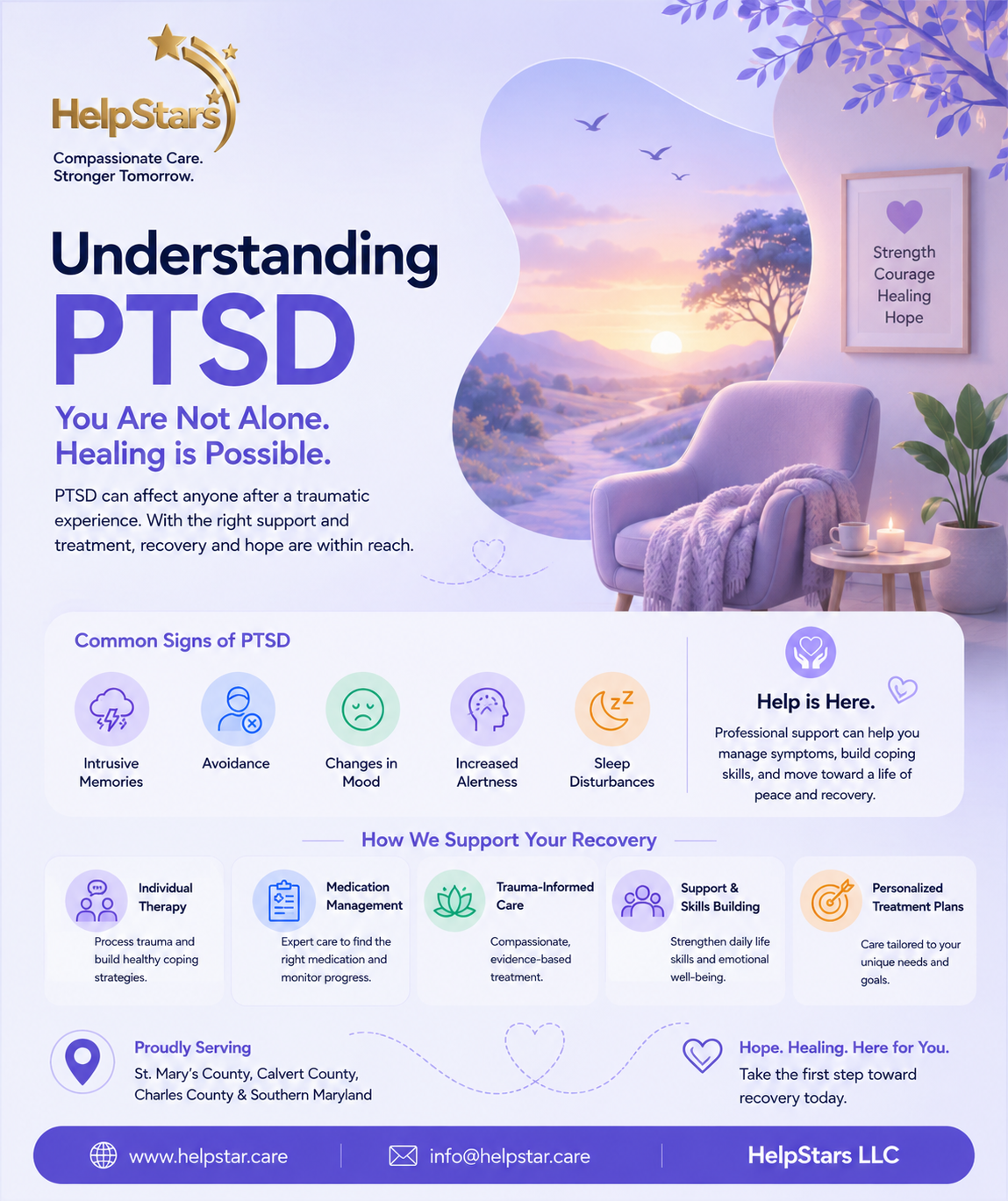
Understanding PTSD: Signs, Symptoms, and When to Seek Professional Help in Southern Maryland
Experiencing a traumatic event can have a lasting impact on emotional, mental, and physical well-being. While many people gradually recover with time and support, others continue to experience symptoms that interfere with work, relationships, sleep, and daily activities. These ongoing challenges may be related to Post-Traumatic Stress Disorder (PTSD).
PTSD is a recognized mental health condition that can affect individuals of all ages. It is important to understand that seeking professional support is not a sign of weakness—it is an important step toward healing. At HelpStars LLC, we provide compassionate behavioral health services that help individuals understand their experiences, build healthy coping strategies, and work toward long-term recovery throughout Southern Maryland.
What Is PTSD?
Post-Traumatic Stress Disorder (PTSD) is a mental health condition that may develop after someone experiences or witnesses a traumatic event. Although many individuals recover naturally over time, others continue to experience distressing symptoms that affect everyday life.
Traumatic experiences may include:
- Serious accidents
- Physical or emotional abuse
- Military combat
- Natural disasters
- Violent incidents
- Medical emergencies
- Loss of a loved one
- Other highly stressful or frightening experiences
Every person's response to trauma is unique, and no two recovery journeys are exactly the same.
Common Signs and Symptoms of PTSD
PTSD symptoms can appear soon after a traumatic event or develop later. They often vary in severity and may affect emotional, physical, and social well-being.
Intrusive Memories
Many individuals experience unwanted memories or flashbacks related to the traumatic event. These memories may feel vivid and emotionally overwhelming.
Symptoms may include:
- Distressing memories
- Flashbacks
- Nightmares
- Emotional distress when reminded of the event
Avoidance Behaviors
People living with PTSD may avoid reminders of the traumatic experience.
This may include avoiding:
- Certain places
- Conversations
- Activities
- People
- Situations associated with the trauma
Avoidance can sometimes make recovery more difficult by limiting healthy coping opportunities.
Changes in Mood and Thinking
PTSD can affect how individuals think and feel about themselves, others, and the future.
Some common emotional symptoms include:
- Persistent sadness
- Anxiety
- Feelings of guilt
- Hopelessness
- Loss of interest in favorite activities
- Feeling emotionally disconnected from others
Increased Alertness and Reactivity
Many individuals feel constantly on edge or alert.
Symptoms may include:
- Difficulty sleeping
- Irritability
- Trouble concentrating
- Feeling easily startled
- Hypervigilance
- Increased anxiety
These symptoms can make work, school, and personal relationships more challenging.
When Should You Seek Professional Help?
Feeling stressed after a traumatic event is a normal human response. However, if symptoms continue for several weeks or months and begin affecting daily life, it may be time to seek professional support.
You should consider reaching out for help if:
- Symptoms interfere with work or school
- Relationships become more difficult
- Sleep problems continue
- Anxiety feels overwhelming
- Daily responsibilities become harder to manage
- You no longer enjoy activities you once loved
Early intervention often leads to better long-term outcomes.
Treatment Options for PTSD
PTSD is treatable, and recovery is possible with the right support.
Depending on each individual's needs, treatment may include:
Individual Therapy
Therapy provides a confidential environment where individuals can process traumatic experiences, develop healthy coping skills, and build resilience.
Medication Management
For some individuals, medication may help manage symptoms such as anxiety, depression, or sleep difficulties. Medication decisions are always made in collaboration with qualified healthcare professionals.
Outpatient Mental Health Services
Many individuals benefit from receiving treatment while continuing to live at home, maintain employment, or attend school. Outpatient care allows flexibility while providing consistent support.
Additional Behavioral Health Services
Some individuals may also benefit from additional behavioral health programs designed to strengthen daily living skills and support long-term recovery, depending on their unique treatment plan.
Supporting a Loved One with PTSD
Family members and friends often play an important role in recovery.
Helpful ways to provide support include:
- Listening without judgment
- Being patient during recovery
- Encouraging professional treatment
- Respecting personal boundaries
- Learning more about PTSD
- Offering encouragement without pressure
Supportive relationships can make a meaningful difference during recovery.
Hope and Recovery Are Possible
Recovery from PTSD takes time, but meaningful progress is possible. Every individual's healing journey is different, and there is no single timeline for recovery.
With compassionate care, evidence-based treatment, and a strong support system, many people living with PTSD regain confidence, improve relationships, and return to activities that bring purpose and fulfillment.
Compassionate PTSD Support at HelpStars LLC
At HelpStars LLC, we are committed to providing compassionate, person-centered behavioral health services for individuals and families throughout Southern Maryland.
Our experienced team works collaboratively with each individual to create personalized treatment plans that support emotional wellness and long-term recovery.
We proudly serve:
- St. Mary's County
- Leonardtown
- Lexington Park
- California
- Great Mills
- Calvert County
- Charles County
Whether you are seeking support for yourself or a loved one, HelpStars LLC is here to help you take the next step toward healing.
Take the First Step Toward Healing
Living with PTSD can feel overwhelming, but you do not have to face it alone. Professional support can help you better understand your experiences, develop healthy coping strategies, and move toward lasting recovery.
If you are looking for compassionate PTSD treatment in Southern Maryland, contact HelpStars LLC to learn more about our behavioral health services and schedule an appointment.