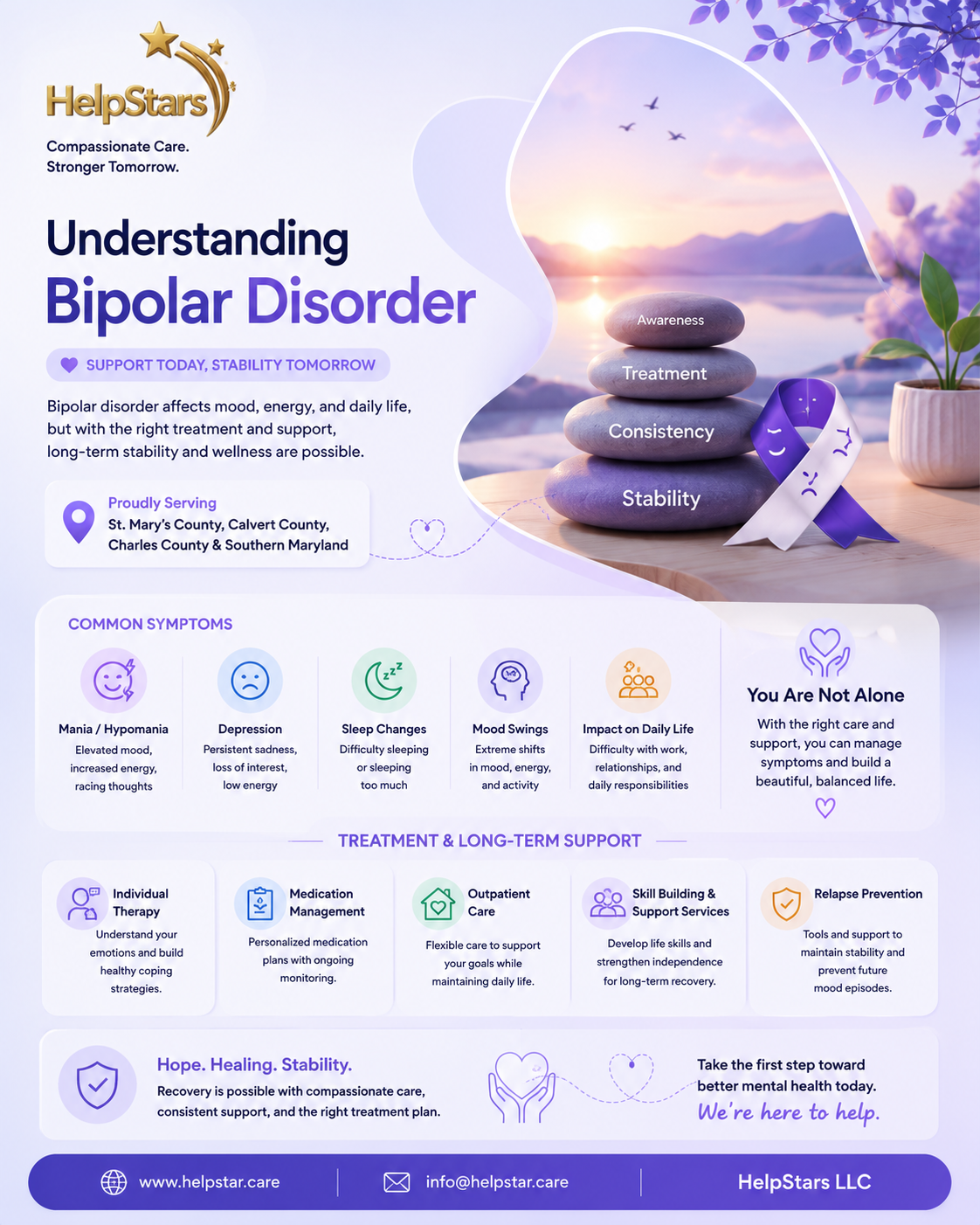
Understanding Bipolar Disorder: Symptoms, Treatment, and Long-Term Support in Southern Maryland
Bipolar disorder is a mental health condition that affects mood, energy levels, activity, and the ability to carry out everyday responsibilities. While everyone experiences emotional ups and downs, bipolar disorder involves noticeable changes in mood that can significantly impact work, relationships, education, and overall well-being.
With early diagnosis, personalized treatment, and ongoing support, many individuals living with bipolar disorder lead productive and fulfilling lives. At HelpStars LLC, we provide compassionate behavioral health services that help individuals better understand their condition, manage symptoms, and build long-term stability throughout Southern Maryland.
What Is Bipolar Disorder?
Bipolar disorder is a mood disorder characterized by episodes of elevated mood, known as mania or hypomania, and episodes of depression. The intensity and duration of these mood changes vary from person to person.
During periods of stability, many individuals function well and maintain healthy personal and professional lives. The goal of treatment is to reduce mood fluctuations and improve overall quality of life.
Common Symptoms of Bipolar Disorder
Symptoms can vary depending on whether someone is experiencing a manic, hypomanic, or depressive episode.
Symptoms of Mania or Hypomania
Individuals may experience:
- Increased energy
- Feeling unusually confident
- Talking more than usual
- Racing thoughts
- Reduced need for sleep
- Increased goal-directed activity
- Impulsive decision-making
- Difficulty concentrating
Symptoms of Depression
During depressive episodes, individuals may experience:
- Persistent sadness
- Loss of interest in activities
- Low energy
- Difficulty sleeping or sleeping too much
- Feelings of hopelessness
- Difficulty concentrating
- Changes in appetite
- Withdrawal from family and friends
These symptoms can affect work, school, relationships, and daily routines.
When Should You Seek Professional Help?
Mood changes that interfere with everyday life should not be ignored. Seeking professional support early can help reduce symptoms, improve stability, and prevent future episodes.
Consider reaching out if:
- Mood swings become difficult to manage.
- Emotional highs and lows disrupt work or school.
- Relationships are affected.
- Daily responsibilities become overwhelming.
- You notice repeated cycles of depression and elevated mood.
Professional evaluation is an important first step toward effective treatment.
How Bipolar Disorder Is Diagnosed
Diagnosis begins with a comprehensive behavioral health assessment. A qualified mental health professional reviews symptoms, medical history, and emotional well-being before recommending an individualized treatment plan.
Because bipolar disorder shares symptoms with other mental health conditions, accurate assessment is essential for appropriate care.
Treatment Options
Every treatment plan is personalized to meet each individual's needs.
Treatment may include:
Individual Therapy
Therapy helps individuals understand mood patterns, develop healthy coping strategies, improve communication skills, and manage stress.
Medication Management
Medication is often an important part of treatment for bipolar disorder. Regular follow-up appointments help providers monitor progress and make adjustments when necessary.
Outpatient Mental Health Services
Outpatient treatment allows individuals to receive ongoing care while maintaining work, school, and family responsibilities.
Additional Behavioral Health Services
Depending on individual needs, some clients may also benefit from supportive behavioral health programs that strengthen daily living skills, improve independence, and encourage long-term recovery.
Living Well With Bipolar Disorder
Managing bipolar disorder involves more than treatment appointments.
Healthy habits can support recovery, including:
- Following your treatment plan
- Getting enough sleep
- Managing stress
- Maintaining regular routines
- Attending scheduled appointments
- Staying connected with supportive family and friends
Consistency plays an important role in long-term emotional wellness.
Supporting Someone Living With Bipolar Disorder
Family members and caregivers can make a positive difference by:
- Learning about bipolar disorder
- Encouraging treatment
- Communicating with patience and respect
- Offering emotional support
- Recognizing early warning signs of mood changes
A strong support system often contributes to better long-term outcomes.
Compassionate Behavioral Health Care at HelpStars LLC
HelpStars LLC is committed to providing individualized behavioral health services that support recovery, stability, and personal growth.
We proudly serve individuals and families throughout:
- St. Mary's County
- Leonardtown
- Lexington Park
- California
- Great Mills
- Calvert County
- Charles County
- Southern Maryland
Our experienced team works collaboratively with each client to develop treatment plans that promote long-term wellness and improved quality of life.
Take the First Step Toward Better Mental Health
Living with bipolar disorder can present challenges, but effective treatment and compassionate support can make a meaningful difference. Recovery is possible, and you do not have to face the journey alone.
If you are looking for professional bipolar disorder treatment in Maryland, contact HelpStars LLC to learn more about our behavioral health services and schedule an appointment.