The Medication Might Be Helping, but the Day Still Feels Hard To Hold Together: Medication Management for Adults Serving California, Maryland
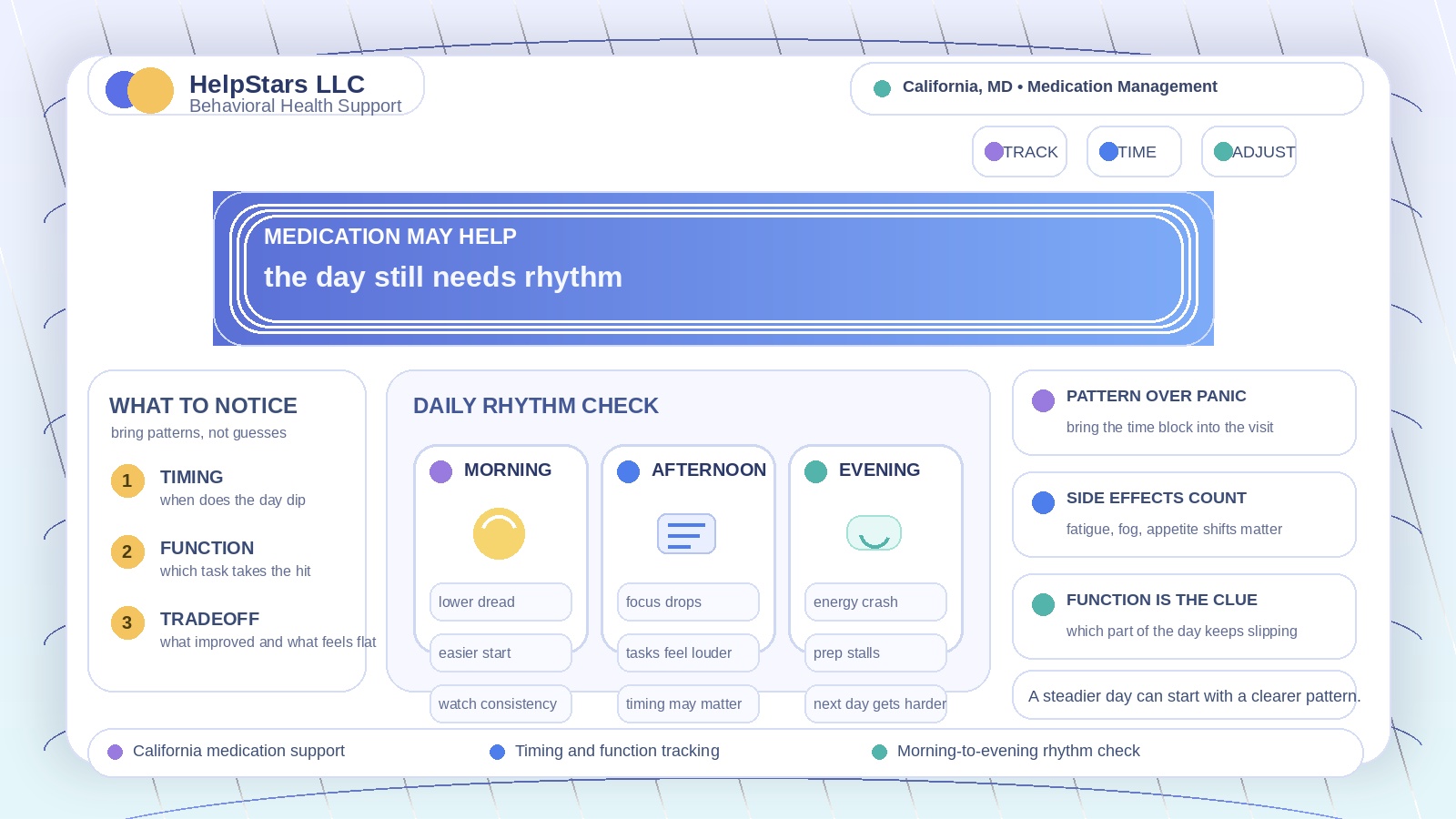
Sometimes the medication question is not, "Is this doing anything at all?" Sometimes the harder question is, "Why do I still keep losing the same part of the day?" A person may be less anxious than before, less reactive than they were a month ago, or more able to get through appointments and errands without shutting down. On paper, that sounds like progress. But real life can still feel uneven. Mornings may start more smoothly than they used to, then concentration drops by midday. Sleep may improve some nights but not in a way that makes the whole week feel dependable. Irritability may be lower, yet motivation, appetite, or follow-through still seem harder than expected.
For adults seeking medication management serving California, Maryland, this in-between stage can be confusing. The person is not where they were before, but they are also not functioning the way they hoped once treatment began. Medication management can help sort out whether the issue involves timing, side effects, consistency, symptom pattern, stress load, or the need for a broader treatment plan instead of more guessing.
At HelpStars LLC, adults across Southern Maryland can access compassionate behavioral health support when medication questions need more structure than trial and error. When part of the day keeps slipping even though some things are better, a closer follow-up may be worth discussing.
Partial Improvement Can Still Leave a Real Functional Problem
People often talk about medication as if it either works or does not work. In reality, many adults experience something less clear-cut. The medication may ease one cluster of symptoms while another difficulty stays active. Emotional intensity may come down, but task initiation still feels slow. Sleep may improve, but the person still wakes up mentally tired. Focus may be stronger in quiet moments, yet crowded schedules or afternoon demands can still throw the day off course.
That gray area matters because it can lead people to minimize what is still happening. They tell themselves they should be grateful things are better. Family members may assume treatment already solved the biggest problem. The person may even feel reluctant to bring concerns to a provider because they do not want to sound unappreciative or difficult. But a treatment plan does not need to be failing in order to need adjustment. Sometimes the issue is that the remaining friction is happening in the part of life that matters most to daily stability.
Why the Shape of the Day Matters More Than a Simple Symptom Score
A useful medication follow-up is not only about whether symptoms exist. It is also about when they show up, how long changes last, and what parts of daily life they interfere with most. Two adults can both say, “I am doing a little better,” and still have very different treatment needs.
One person may feel more stable emotionally but notice that attention drops sharply after lunch. Another may sleep more consistently yet still feel flat, slowed down, or disconnected in the evening. Someone else may have fewer panic spikes but still miss meals, forget tasks, or feel mentally scrambled during transitions between work, home, and appointments.
That is why the shape of the day can be so important in medication management. A person may not need a dramatic change. They may need a clearer look at pattern, timing, side effects, daily routine, or whether other supports such as counseling, psychiatric follow-up, or a more structured level of care should be part of the plan.
Four Things Worth Noticing Before a Follow-Up Appointment
People do not need a perfect journal to have a productive medication appointment. Still, a few concrete observations can make the conversation much more useful. Helpful things to notice may include:
- When the day feels strongest and weakest. Is the hardest stretch first thing in the morning, midafternoon, after work, or once the house gets quiet?
- What improves and what does not. Maybe anxiety is lower but motivation is not. Maybe sleep is better but patience is still thin. Maybe mood is steadier but organization is not.
- Whether the problem is symptom-related or side-effect-related. Fatigue, restlessness, appetite change, headaches, brain fog, or emotional flattening can shape how a person functions even when the medication is helping in other ways.
- What daily tasks keep taking the hit. Work concentration, school follow-through, driving, parenting, meals, errands, communication, or basic routine maintenance can all reveal where the plan still needs work.
These details can turn “I guess it is kind of helping” into something much more actionable.
A California, Maryland Example: Mornings Are Better, but the Rest of the Day Still Unravels
Imagine an adult serving California, Maryland and nearby St. Mary’s County communities who recently started feeling less flooded in the morning. They are getting out of bed with less dread. Their first few hours feel more manageable than they did before treatment. From the outside, everyone around them assumes the medication is working well.
But by early afternoon, the day keeps losing shape. Focus slips during routine tasks. Small decisions start feeling mentally expensive. The person becomes more irritable with texts, paperwork, or ordinary requests. By evening, they are too drained to prepare for the next day, which means the next morning begins with more friction again. The improvement is real, but it is only covering part of the cycle.
In that situation, a medication follow-up may help clarify whether the issue involves duration, dosage timing, side effects, another untreated symptom pattern, or the need for better coordination with therapy, routines, and stress management. The right next step is not always “stay the same because it helped a little” or “scrap everything because it is not perfect.” Sometimes the better move is understanding the part of the day that is still carrying too much weight.
Questions Worth Bringing to a Medication Management Visit
- Which part of the day still breaks down most often? Naming the time window can make the conversation more specific.
- What has clearly improved since treatment started? This helps preserve what is working instead of speaking only from frustration.
- What feels worse, flatter, or harder than expected? Side effects and tradeoffs matter.
- Is daily routine helping the medication work, or working against it? Sleep changes, inconsistent meals, missed doses, and stress load can all affect how the plan feels.
- Do I need medication changes alone, or do I need more support around the rest of the week? Sometimes the answer involves counseling, psychiatric evaluation, IOP, PRP, or another layer of structured care.
These questions help move the visit beyond a yes-or-no discussion and toward a fuller picture of what life still looks like between appointments.
Small Mismatches Can Create Bigger Problems Than People Expect
When medication is partially helpful, the remaining problem often gets dismissed because it sounds ordinary. But ordinary problems can become major stress points if they keep repeating in the same place. A person who loses focus every afternoon may start falling behind at work. Someone who crashes every evening may stop preparing meals, returning messages, or staying organized enough for the next morning. A person who feels emotionally flatter than expected may begin withdrawing from family without fully understanding why.
That matters because mental health treatment is not only about lowering distress in the abstract. It is also about protecting function. If the same time block keeps absorbing the impact of symptoms or side effects, that pattern deserves attention even when other parts of treatment are moving in the right direction.
Medication Questions Do Not Have To Be Solved Through Guesswork Alone
Many adults delay follow-up because they think they need stronger evidence before speaking up. They wait for things to get clearly worse, or they keep telling themselves to give it more time without tracking what is actually happening. Sometimes patience is appropriate. Other times, waiting quietly just stretches out a pattern that could be clarified sooner.
A thoughtful medication management conversation can help adults organize the timeline, identify the real trouble spot, and decide whether the next step involves monitoring, adjustment, or support beyond medication alone. That kind of clarity can reduce self-doubt. Instead of wondering whether they are overreacting, the person starts looking at actual patterns.
Common Questions About Medication Follow-Up
Does partial improvement mean the medication is failing?
No. Partial improvement can still be meaningful. It may also mean the treatment plan needs refinement, better tracking, or additional supports.
What if I feel better in one way and worse in another?
That is important information to bring to a provider. A plan should consider tradeoffs such as fatigue, sleep disruption, emotional flattening, appetite change, restlessness, or timing issues.
Should I wait until symptoms become severe again before asking about an adjustment?
Not necessarily. Repeated friction in daily functioning can be worth discussing even before it becomes a larger setback.
Can medication management fit alongside other behavioral health services?
Yes. Depending on the person’s needs, medication follow-up may be one part of a broader outpatient plan that also includes counseling, psychiatric evaluation, PRP, group therapy, family support, or a higher level of care.
A Better Rhythm Can Matter as Much as a Better Number
Sometimes the next treatment step is not about chasing a perfect mood score. It is about helping the day feel more usable from one block of time to the next. When medication is easing some of the burden but the same stretch of the day still keeps falling apart, that pattern deserves real attention.
HelpStars LLC provides compassionate behavioral health support for adults and families across Southern Maryland. For adults seeking medication management serving California, Maryland, a follow-up focused on timing, function, and the shape of the day may help turn partial relief into something steadier and more workable.