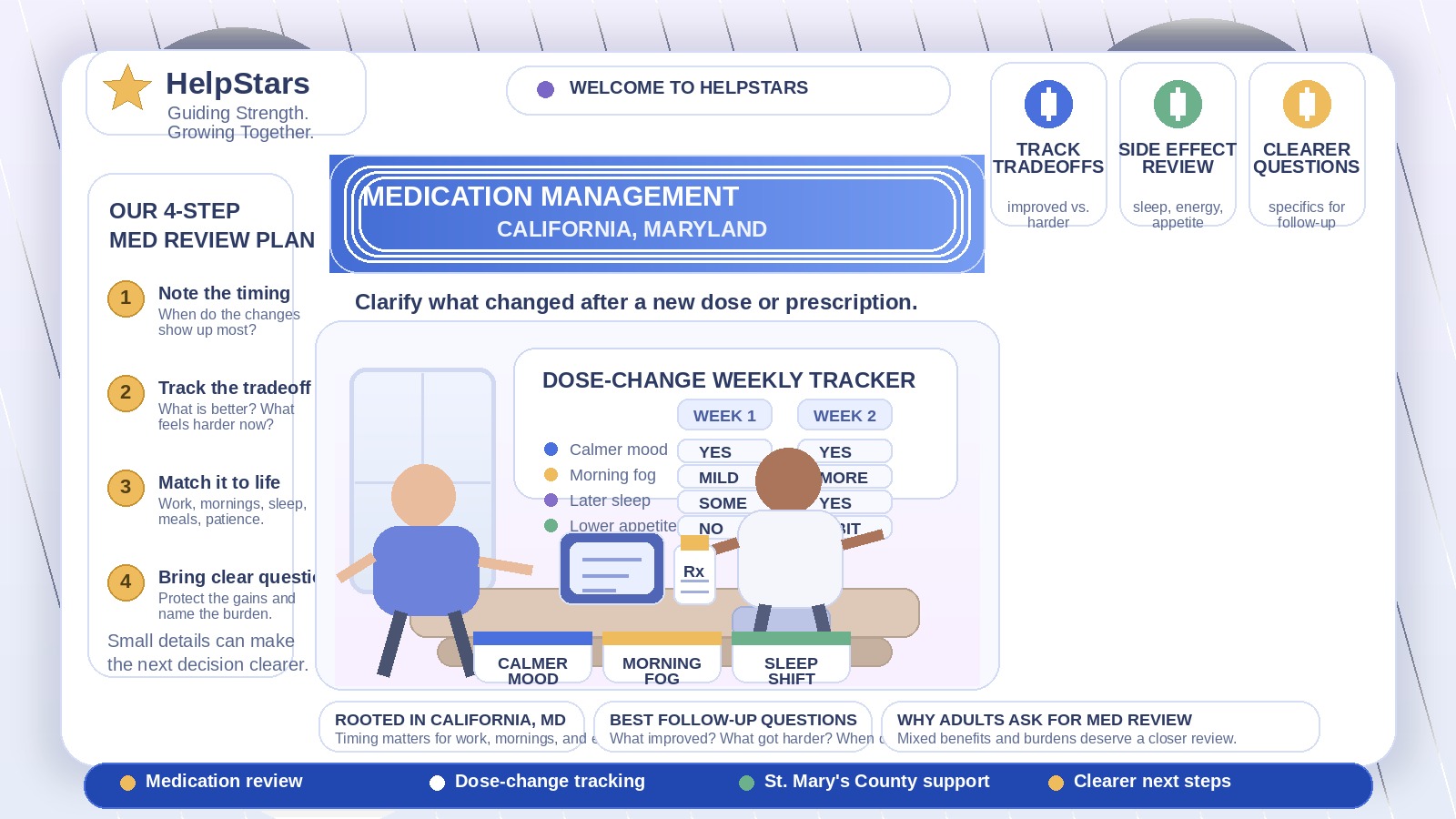
The Dose Changed, but So Did Everything Else: Medication Management for Adults in California, Maryland
Sometimes a medication change does not create one clean result. It may quiet one problem while introducing a new one. Sleep may improve while mornings feel heavier. Anxiety may soften while focus feels slower. Irritability may ease while appetite or energy shifts in ways that are harder to explain. When several things change at once, adults can end up unsure whether the medication is helping, hurting, or doing a little of both.
For adults in California, Maryland, medication management can help turn that mixed experience into a clearer review. The goal is not to expect a perfect reaction right away. The goal is to look closely at what changed, when it changed, what feels more manageable, and what now feels harder so the next treatment decision is based on real patterns instead of guesswork.
HelpStars LLC provides compassionate behavioral health support for adults and families across Southern Maryland. When a medication adjustment starts affecting sleep, energy, focus, mood, or daily routine in uneven ways, a thoughtful follow-up conversation may help clarify the next step.
Improvement and Discomfort Can Show Up at the Same Time
One reason medication follow-ups can feel confusing is that progress does not always arrive in a straight line. Adults may notice one clear benefit and still feel unsettled by everything around it. A person might say they feel calmer during the day but harder to wake up in the morning. Another might feel less emotionally overwhelmed but more mentally foggy by late afternoon. Someone else may feel more stable overall yet struggle to tell whether reduced appetite, restlessness, or sleep changes are temporary or becoming part of the week.
That mixed response matters. It does not automatically mean a medication is wrong, and it does not automatically mean everything is fine. It usually means the details of timing, severity, and daily impact deserve a closer look.
What To Track After a Dose Change or New Prescription
Adults often try to summarize a whole week with one sentence such as “I think it helped” or “I do not like how I feel on it.” Those reactions are understandable, but they can miss the information that makes follow-up care more useful. Medication management visits often go better when people bring practical observations like:
- what symptom seems better, worse, or unchanged,
- what time of day the change is most noticeable,
- whether sleep, appetite, motivation, patience, or concentration shifted too,
- whether work, errands, parenting, or social energy now feel easier or harder,
- how long the change has been noticeable, and
- whether the pattern is steady or keeps moving around from day to day.
These details help turn a vague impression into a clearer treatment picture. They also make it easier to discuss whether the current plan needs more time, closer monitoring, a different strategy, or a more targeted adjustment.
Three Follow-Up Questions That Can Make the Conversation More Useful
- What seems better enough to protect? If mood is more even, panic is less intense, or irritability has dropped, that part of the response should stay in the conversation and not get lost behind newer frustrations.
- What tradeoff is interfering with daily life the most? Morning grogginess, appetite changes, restlessness, headaches, or flatness may not matter equally. Naming the most disruptive tradeoff helps focus the appointment.
- What pattern still feels unclear? Sometimes the hardest part is not one symptom but uncertainty itself. Adults may need help figuring out whether a change is medication-related, stress-related, temporary, or part of the original mental health pattern.
Those questions can make a visit feel more grounded than simply deciding whether the medication is “good” or “bad.”
A California, Maryland Example: Calmer Afternoons, Harder Mornings
Imagine an adult in California, Maryland who recently started a medication adjustment after several months of feeling emotionally stretched thin. By the second week, they notice fewer midday spikes in anxiety. They are not as reactive in conversation, and they are getting through work with less internal tension. On paper, that sounds like progress.
But mornings have become harder. Getting out of bed takes longer. The first hour of the day feels slower and less organized. Breakfast sounds unappealing. The person cannot tell whether this is an early adjustment that may settle, a sign the timing needs review, or a tradeoff that is starting to interfere with the rest of the day. Because the improvement is real, they hesitate to bring up the downside. Because the downside is real, they also hesitate to call it a success.
Medication management can help organize that middle ground. Instead of treating the week as one overall verdict, the discussion can separate what is improving from what is becoming harder and look more carefully at what the pattern suggests.
Why Small Everyday Details Matter
Clinical decisions are often shaped by very ordinary parts of life. If a person is calmer but now cannot get moving in time for work, that matters. If sleep is slightly better but evening focus drops enough to affect parenting or household tasks, that matters too. The most helpful follow-up conversations usually connect symptoms to daily function rather than discussing feelings in the abstract.
Useful examples may include:
- whether the morning routine now feels delayed, rushed, or harder to finish,
- whether patience at home improved even if energy dropped,
- whether concentration at work is steadier, slower, or inconsistent,
- whether the body feels more settled, more restless, or simply different, and
- whether the tradeoff feels mild, manageable, or unsustainable.
That kind of detail can be more useful than trying to sound medically precise.
Questions Adults Often Ask
Do I need to wait until I feel completely sure something is wrong before bringing it up?
No. Uncertainty itself can be important information. If a medication change has made the week feel noticeably different, that is often worth discussing even when the pattern is still forming.
What if some symptoms improved and others got worse?
That is a common reason adults seek medication management follow-up. Mixed results do not automatically mean failure. They usually mean the response needs a more careful review.
Should I only mention side effects?
No. It also helps to describe what improved, what stayed the same, and what parts of daily life now feel easier. Follow-up decisions are stronger when both benefits and burdens are visible.
Can medication management work alongside counseling or other outpatient care?
Yes. Depending on the person’s needs, medication management may be one part of a broader outpatient behavioral health plan that also includes counseling, psychiatric evaluation, PRP, IOP, or family support.
Local Routine Still Matters in St. Mary’s County
For adults in California, Maryland and nearby St. Mary’s County communities, medication effects show up inside real routines: commuting, shift work, caregiving, errands, appointments, and family responsibilities. A change that seems small in theory can feel bigger when it affects the hour before work, the drive home, or the energy needed for the rest of the evening. That is one reason local outpatient follow-up can be valuable. The right next step should fit the week a person is actually living.
Clearer Follow-Up Can Reduce Second-Guessing
Adults do not always need a dramatic medication problem before a follow-up becomes worthwhile. Sometimes they simply need help making sense of a response that feels split between benefit and burden. A good medication management conversation can protect what is improving, name what is getting in the way, and create a steadier next decision.
HelpStars LLC supports adults and families across Southern Maryland with compassionate behavioral health services. For adults in California, Maryland who feel like a recent medication change helped in some ways but complicated the week in others, medication management may offer a more practical way to sort out what should happen next.