Introduction
In behavioral health recovery, stability alone is not the end goal. Many individuals who receive therapeutic support still face a major barrier: transitioning from clinical improvement to meaningful daily functioning and employment.
This gap is especially visible in community-based systems across St. Mary's County, where individuals living with mental health conditions often require both structured rehabilitation and practical workforce support.
Two core services bridge this gap:
- Psychiatric Rehabilitation Program (PRP)
- Supported Employment Program (SEP)
When integrated effectively, PRP and SEP form a continuous recovery pathway—helping individuals not only stabilize but also reintegrate into community life and long-term employment.
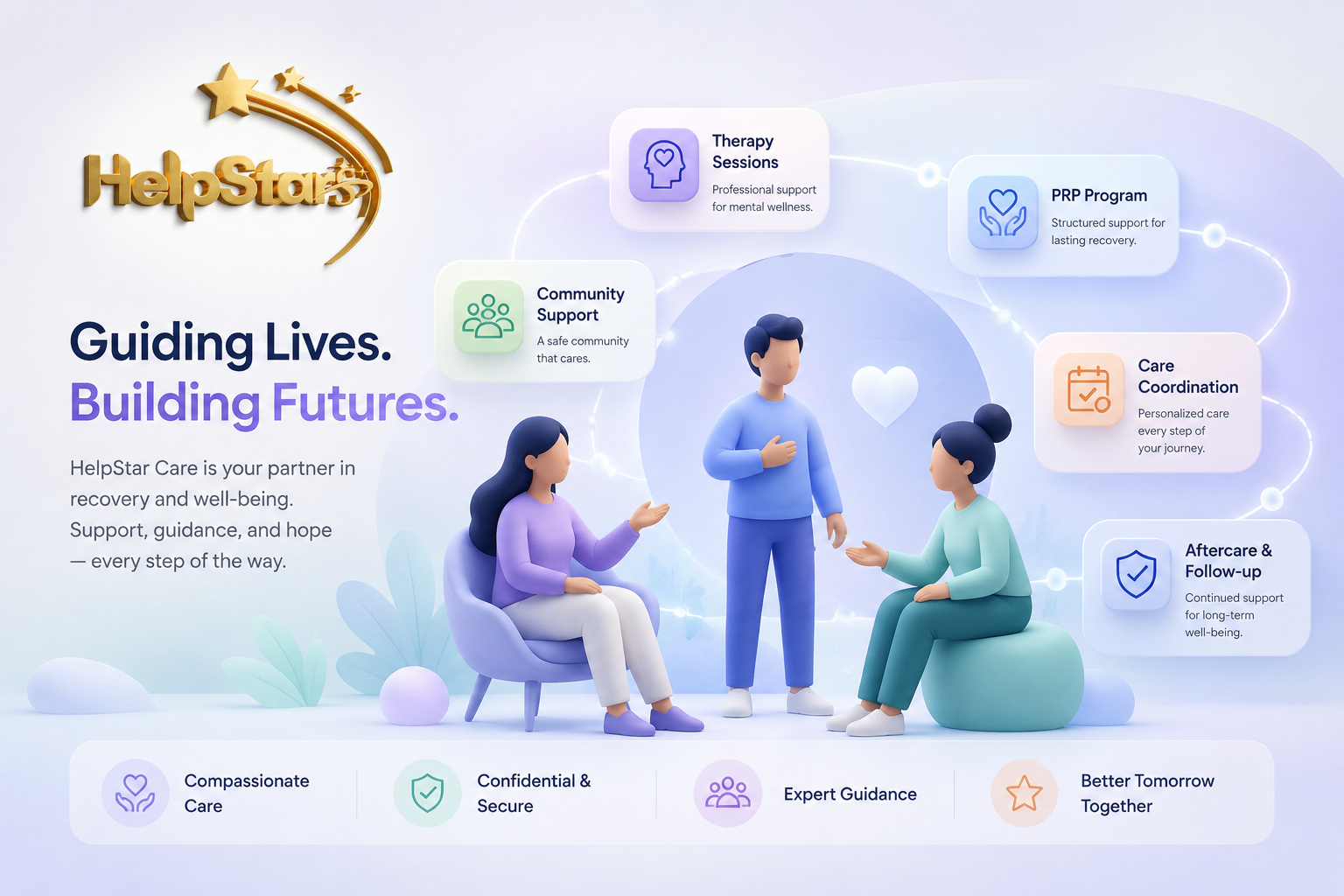
At HelpStar Care, this connection is treated as part of a broader community recovery ecosystem, where behavioral health care extends beyond therapy into real-world independence.
Key Takeaways
- PRP focuses on daily living skills, coping strategies, and functional stability
- SEP focuses on job readiness, employment placement, and workplace sustainability
- Together, they create a structured recovery-to-employment pathway
- Integration reduces relapse risk by improving independence and purpose
- Coordinated services are essential in community behavioral health systems like St. Mary’s County
Understanding PRP: Building Stability Before Employment
Psychiatric Rehabilitation Programs (PRP) are designed to help individuals regain essential life skills needed for independent living and community participation.
In a PRP model, participants may receive support in:
- Managing daily routines and responsibilities
- Developing emotional regulation and coping skills
- Improving communication and social interaction
- Medication adherence and wellness structure
- Building consistency in community engagement
PRP is not focused on employment directly—it focuses on functional readiness. Without this foundation, employment placement can become unstable or unsustainable.
In regions like St. Mary’s County, PRP plays a critical role in helping individuals transition from clinical care into structured community participation.
Understanding SEP: Turning Recovery Into Employment Opportunity
Supported Employment Programs (SEP) take the next step: helping individuals enter and maintain competitive employment.
SEP services typically include:
- Job readiness training
- Resume and interview preparation
- Workplace skill development
- Employer engagement and job matching
- On-the-job support and retention assistance
- Career coaching and vocational planning
The goal is not just job placement—it is long-term employment sustainability, especially for individuals managing ongoing mental health conditions.
Without SEP, many individuals remain in recovery programs without a clear pathway into financial independence or workforce reintegration.
How PRP and SEP Work Together as a Recovery System
PRP and SEP are most effective when they function as a connected continuum rather than separate services.
1. PRP Builds Readiness
Before employment support begins, PRP strengthens:
- Emotional stability
- Routine consistency
- Social and communication skills
- Responsibility management
2. SEP Activates Employment Pathways
Once readiness is established, SEP supports:
- Job placement based on skill level
- Workplace adaptation strategies
- Employer coordination
- Long-term retention support
3. Continuous Feedback Loop
The integration allows both programs to inform each other:
- SEP identifies workplace challenges
- PRP reinforces underlying skill gaps
- Progress is continuously adjusted
This creates a cycle of stabilization → employment → reinforcement → sustainability
Why Integration Matters in St. Mary’s County Behavioral Health Systems
In community settings like St. Mary's County, behavioral health systems often serve individuals with complex, overlapping needs.
Without integration:
- PRP participants may feel “stuck” without progression
- SEP participants may struggle due to lack of foundational skills
- Care coordination becomes fragmented
- Employment outcomes remain inconsistent
With integration:
- Individuals experience a clear recovery roadmap
- Providers can track progress across multiple dimensions
- Employment becomes part of recovery—not separate from it
- Long-term independence becomes more achievable
This is especially important in rural and semi-urban communities where access to layered services must be coordinated efficiently.
Common Challenges Without SEP + PRP Coordination
When PRP and SEP operate independently, several gaps can appear:
- Employment starts before readiness is established
- Skill development is not aligned with job requirements
- Participants lose jobs due to lack of ongoing support
- Care teams lack visibility into employment progress
- Recovery plans become fragmented
These challenges highlight why a structured, ecosystem-based approach is essential.
A Community Recovery Ecosystem Approach at HelpStar Care
HelpStar Care operates with a community recovery ecosystem model, where PRP and SEP are not separate programs but interconnected stages of recovery support.
This approach ensures:
- Individuals are not rushed into employment prematurely
- Clinical and vocational progress are aligned
- Support continues beyond placement into long-term stability
- Families and providers stay informed throughout the journey
Rather than treating employment as an endpoint, it is treated as a supported transition within recovery.
How HelpStar Care Supports the PRP + SEP Continuum
Within this ecosystem model, HelpStar Care focuses on aligning behavioral health recovery with workforce readiness.
PRP Support Focus:
- Daily living skill development
- Structured rehabilitation planning
- Behavioral stabilization support
- Community engagement readiness
SEP Support Focus:
- Job readiness and skill translation
- Employment matching and placement support
- Workplace retention strategies
- Ongoing vocational coaching
Integrated Outcome:
The combined approach ensures individuals are not only clinically supported but also practically prepared for independence.
Best Practices for Effective PRP + SEP Integration
1. Start with Readiness, Not Placement
Employment should begin only when foundational stability is established through PRP.
2. Maintain Continuous Communication Between Teams
PRP and SEP teams should regularly align on progress and barriers.
3. Focus on Long-Term Sustainability
Job retention is as important as job placement.
4. Use Individualized Recovery Plans
No two recovery-to-employment pathways are the same.
5. Reinforce Skills After Employment Begins
Support does not end at job placement—it evolves with it.
Final Thoughts
The connection between PRP and SEP represents one of the most important advancements in modern behavioral health recovery systems.
In communities like St. Mary’s County, where individuals often need both structured rehabilitation and workforce reintegration support, this integrated model creates a clearer and more sustainable path forward.
By aligning psychiatric rehabilitation with supported employment, behavioral health providers can move beyond short-term stabilization and toward long-term independence, dignity, and community participation.
At HelpStar Care, this integrated approach reflects a broader commitment to building a recovery ecosystem where every stage of support contributes to real-world outcomes—especially employment, stability, and long-term wellbeing.