Introduction
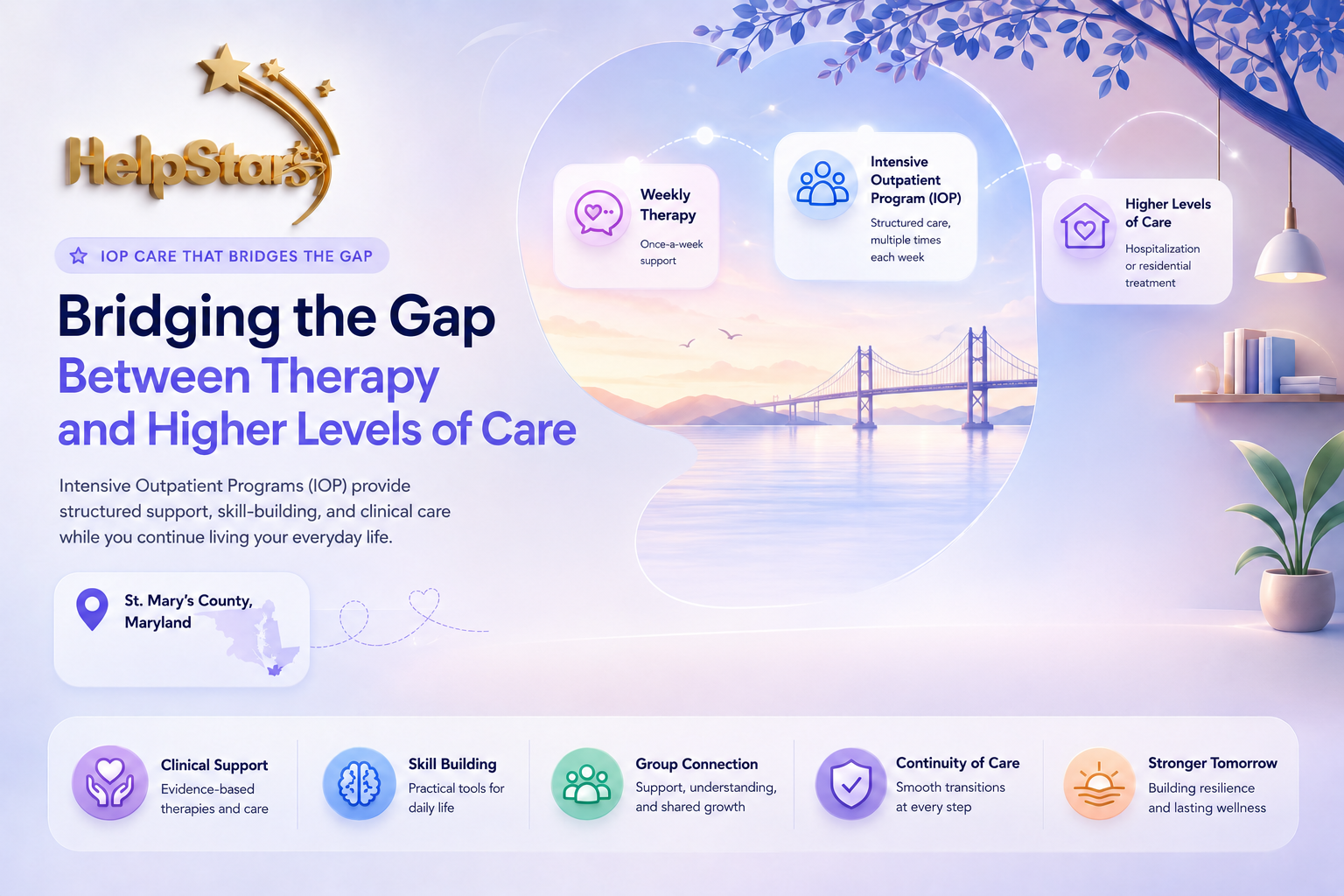
Mental health recovery is not always a straight path. While some individuals benefit from traditional weekly therapy, others may need a more structured level of support without requiring hospitalization or residential treatment.
This is where Intensive Outpatient Programs (IOP) play a vital role. An IOP provides a higher level of care than standard outpatient therapy while allowing individuals to continue living at home, maintaining family relationships, and participating in daily responsibilities.
For individuals and families in St. Mary's County, Maryland, access to structured outpatient mental health treatment can make a significant difference in managing symptoms, building coping skills, and preventing mental health challenges from escalating into crises.
As part of a comprehensive community recovery ecosystem, Intensive Outpatient Programs help bridge the gap between traditional outpatient services and more intensive treatment settings, providing individuals with the support they need to move toward long-term stability and wellness.
Key Takeaways
- Intensive Outpatient Programs provide structured mental health treatment without requiring hospitalization.
- IOP services offer more support than traditional weekly therapy sessions.
- Group-based treatment, skill development, and clinical support work together to promote recovery.
- IOP can benefit individuals experiencing depression, anxiety, trauma-related challenges, and other behavioral health concerns.
- A coordinated behavioral health ecosystem helps individuals transition smoothly between different levels of care.
What Is an Intensive Outpatient Program?
An Intensive Outpatient Program (IOP) is a structured outpatient mental health program designed for individuals who need more support than traditional therapy but do not require inpatient treatment.
Unlike standard outpatient services, IOP participants typically attend multiple treatment sessions each week. These sessions often combine clinical therapy, psychoeducation, skill-building activities, and group support.
The goal is to provide consistent therapeutic engagement while allowing participants to remain connected to their homes, families, schools, or workplaces.
For many individuals in St. Mary's County, an IOP serves as an effective middle ground between weekly counseling and higher levels of behavioral health intervention.
When Might Someone Benefit from IOP Services?
An Intensive Outpatient Program may be appropriate when an individual:
- Needs more support than weekly therapy can provide
- Is experiencing increased symptoms of depression or anxiety
- Requires additional structure during recovery
- Is transitioning from a hospital or crisis stabilization program
- Needs ongoing therapeutic support while maintaining daily responsibilities
- Would benefit from regular group-based mental health treatment
Every individual's situation is unique, which is why clinical assessments are important in determining the most appropriate level of care.
How IOP Supports Mental Health Recovery
Structured Clinical Support
One of the primary benefits of an IOP is the increased frequency of therapeutic engagement. Regular sessions allow individuals to address challenges in real time while developing practical coping strategies.
Skill Development and Education
Participants often learn skills related to:
- Emotional regulation
- Stress management
- Communication
- Conflict resolution
- Problem-solving
- Healthy coping mechanisms
These skills can strengthen long-term recovery and improve day-to-day functioning.
Peer Connection and Group Support
Many Intensive Outpatient Programs include group therapy sessions that create opportunities for individuals to connect with others facing similar challenges.
This supportive environment can help reduce feelings of isolation while encouraging accountability and personal growth.
Why IOP Is an Important Part of the Behavioral Health Continuum
Behavioral health services are most effective when individuals have access to multiple levels of care based on their needs.
Without an Intensive Outpatient Program, individuals may face two common challenges:
- Weekly therapy may not provide enough structure during difficult periods.
- Hospital-level care may be more intensive than necessary.
IOP fills this gap by offering a structured outpatient mental health treatment option that promotes stability while preserving independence.
This flexibility makes IOP an important component of modern community mental health services.
Common Challenges Individuals Face Without Structured Outpatient Support
When individuals need more support than traditional therapy but cannot access an appropriate level of care, several challenges may emerge:
- Increased risk of symptom escalation
- Difficulty maintaining treatment consistency
- Reduced engagement in recovery activities
- Greater stress on families and support systems
- Increased likelihood of crisis intervention
Structured outpatient programs help address these challenges through consistent therapeutic engagement and ongoing support.
How Intensive Outpatient Programs Fit Within a Community Recovery Ecosystem
Effective behavioral health care extends beyond individual appointments. It requires a coordinated system that supports individuals throughout different stages of recovery.
Within a community recovery ecosystem, Intensive Outpatient Programs work alongside other behavioral health services to create a continuum of care.
This coordinated approach helps ensure that individuals receive the right level of support at the right time while maintaining continuity throughout their recovery journey.
By connecting treatment, education, skill development, and community support, IOP services help strengthen long-term outcomes for individuals and families.
How HelpStar Care Supports Individuals Through Structured Behavioral Health Services
At HelpStar Care, behavioral health services are designed to support individuals through multiple stages of recovery and wellness.
Through a community-centered approach, individuals can access structured services that promote stability, resilience, and long-term success.
An Intensive Outpatient Program can serve as an important part of this journey by providing consistent therapeutic support, skill development opportunities, and a pathway toward improved mental health outcomes.
Rather than focusing solely on symptom management, the goal is to help individuals build the tools, confidence, and support systems needed to thrive within their communities.
Best Practices for Maximizing IOP Success
1. Participate Consistently
Regular attendance allows individuals to fully benefit from the therapeutic structure and support provided by the program.
2. Apply Skills Outside of Sessions
Recovery progresses when coping strategies and skills learned during treatment are practiced in everyday life.
3. Engage With Support Networks
Family members, friends, and community resources can play an important role in maintaining progress.
4. Communicate Openly With Providers
Honest communication helps treatment teams adapt services to evolving needs and goals.
5. View Recovery as a Long-Term Process
IOP is often one step within a broader recovery journey that continues through ongoing support, wellness planning, and community engagement.
Final Thoughts
Intensive Outpatient Programs provide an essential bridge between traditional outpatient therapy and higher levels of behavioral health care. By offering structured support, skill development, and consistent therapeutic engagement, IOP services help individuals navigate challenges while maintaining their connection to everyday life.
For individuals and families in St. Mary's County, Maryland, access to an Intensive Outpatient Program can create meaningful opportunities for healing, growth, and long-term recovery.
As part of a broader community recovery ecosystem, HelpStar Care remains committed to supporting individuals through compassionate, structured, and person-centered behavioral health services that promote lasting wellness and independence.