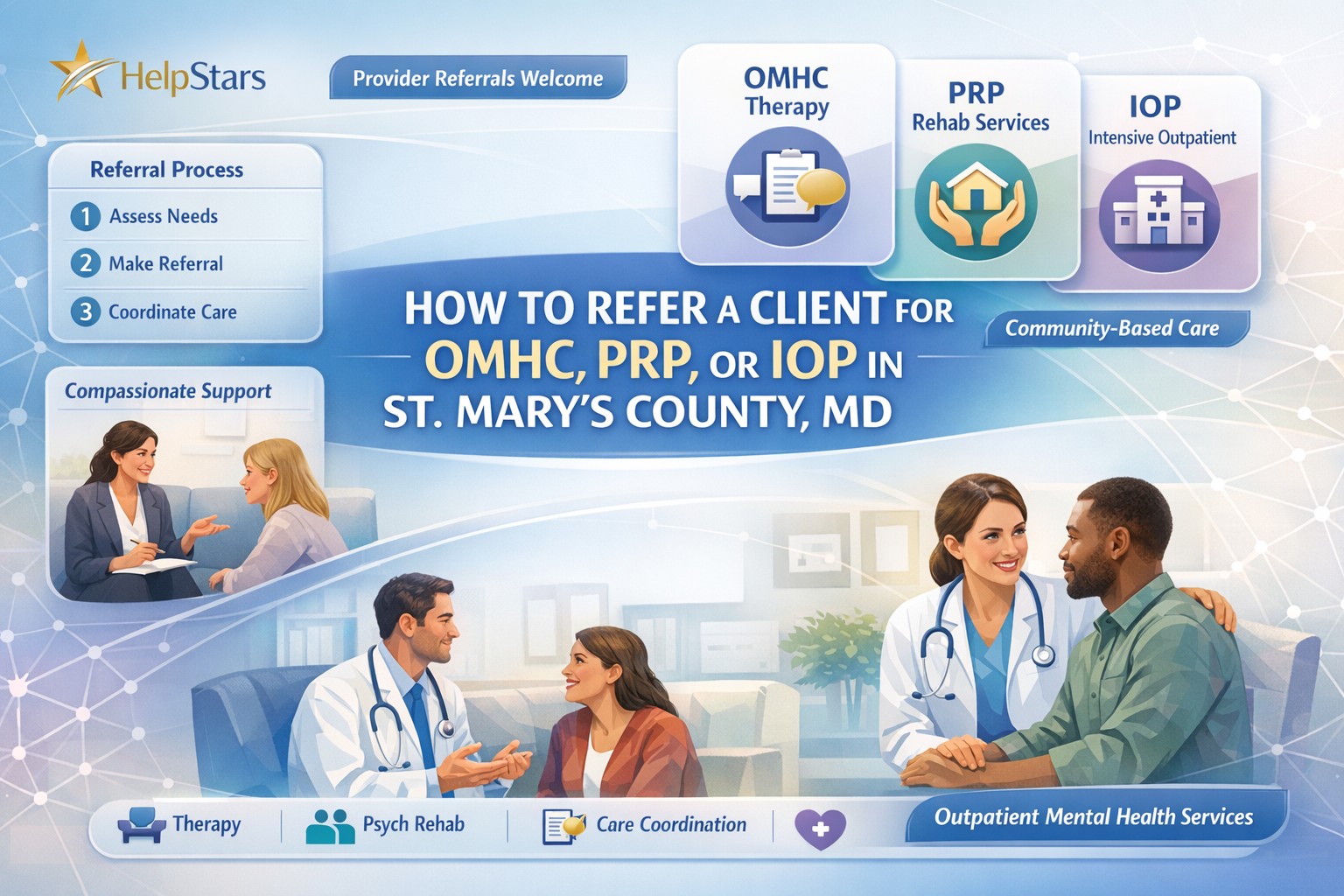
How to Refer a Client for OMHC, PRP, or IOP in St. Mary’s County, Maryland
Referring a client for behavioral health care is more than paperwork. It is often a critical step toward treatment, stability, and long-term recovery. For providers, school teams, community partners, and families in Southern Maryland, one of the most important questions is not simply whether someone needs help, but what kind of help will support them best right now.
At HelpStars LLC, referrals often connect clients to three important levels of outpatient behavioral health support: OMHC, PRP, and IOP. Understanding the difference between these services can make your mental health referral faster, clearer, and more effective.
What Is OMHC?
Outpatient Mental Health Clinic (OMHC) services are a strong fit when a client needs ongoing clinical treatment while continuing to live at home, attend school, work, or stay active in the community.
An OMHC referral may be appropriate when someone needs:
- individual therapy
- family therapy
- group therapy
- psychiatric evaluation
- medication management
- ongoing mental health counseling
This level of care is often appropriate for individuals experiencing anxiety, depression, trauma-related symptoms, mood instability, grief, adjustment concerns, or behavioral health challenges affecting daily life.
What Is PRP?
A Psychiatric Rehabilitation Program (PRP) may be the right fit when a client needs more than therapy alone. PRP focuses on practical skill-building and community-based support that helps people improve daily functioning and move toward greater independence.
PRP services can help with:
- building daily routines
- improving communication and social skills
- emotional regulation
- follow-through with appointments and treatment goals
- school or workplace readiness
- community integration and recovery planning
PRP often works best alongside outpatient therapy or psychiatric treatment. When someone is attending counseling but still struggling to manage responsibilities outside the therapy session, psychiatric rehabilitation can provide the additional structure and real-world support they need.
When Is IOP the Better Referral?
An Intensive Outpatient Program (IOP) is a higher level of outpatient mental health care. It is designed for individuals who need more structure and therapeutic support than weekly therapy alone, but who may not require inpatient hospitalization.
An IOP referral may be appropriate when a client:
- needs several hours of treatment each week
- is struggling despite routine outpatient therapy
- has increasing symptoms of depression or anxiety
- needs added support after a recent crisis or hospitalization
- benefits from structured, group-based treatment
IOP can help clients stabilize symptoms, strengthen coping skills, and reduce the likelihood of worsening mental health concerns while remaining in the community.
Questions to Ask Before Sending a Referral
Before referring a client for OMHC, PRP, or IOP services in St. Mary’s County, Maryland, it helps to gather a few key details. The goal is not to delay the referral. The goal is to make it as clear and useful as possible.
- What symptoms or functional concerns are most urgent? Be specific about mood symptoms, trauma responses, anxiety, isolation, school or work problems, medication concerns, or reduced daily functioning.
- What level of support does the client need right now? Some clients need weekly clinical care, while others need a more structured outpatient program or community-based rehabilitation support.
- Is the client already receiving behavioral health services? Knowing what is already in place helps reduce duplication and care gaps.
- Are there barriers that could affect follow-through? Transportation, work schedules, family stress, and communication barriers can all affect whether someone is able to engage in care.
- Are there immediate safety concerns? If a client is in acute danger or unable to remain safe in the community, crisis intervention or emergency care may be needed before an outpatient referral.
What Information Helps a Referral Move Faster?
A strong behavioral health referral often includes:
- client contact information
- parent or guardian information when applicable
- referral source contact details
- reason for referral
- current symptoms and functional concerns
- relevant diagnoses, if known
- current medications, if known
- prior or current treatment history
- insurance information, if available
- hospital discharge or supporting documents when relevant
Even when every document is not available yet, a clear summary of needs can help start the intake process more quickly.
Why Timely Referrals Matter
Delays in mental health treatment can affect more than symptoms alone. When support is postponed, clients may experience worsening stress at home, disruptions at school or work, increased isolation, repeated crises, or difficulty maintaining progress after hospitalization.
Timely referrals can:
- connect clients to treatment before symptoms escalate
- improve continuity of care after crisis services or hospitalization
- support families navigating complex behavioral health needs
- reduce avoidable disruptions at home, school, or work
- create a clearer path toward recovery and independence
Supporting Referrals Across Southern Maryland
Behavioral health needs do not always fit into one service category. Some clients need therapy and medication management. Others need psychiatric rehabilitation support in the community. Others may need a structured IOP before stepping down to routine outpatient care.
That is why choosing the right outpatient behavioral health provider matters. A provider that understands OMHC services in Maryland, PRP services in St. Mary’s County, and IOP services in Southern Maryland can help clients access care that matches their needs more closely.
For community providers, schools, hospitals, case managers, and families, the goal is simple: make a behavioral health referral that leads to the right level of support at the right time.
Final Thoughts
If you are deciding how to refer a client for mental health services in St. Mary’s County, start by identifying the client’s needs, level of functioning, and urgency of support.
- OMHC may be the best fit for therapy, counseling, psychiatric evaluation, and medication management.
- PRP may be the best fit when a client needs psychiatric rehabilitation and practical skill-building.
- IOP may be the best fit when symptoms call for a more structured outpatient program.
The right referral can open the door to meaningful treatment, better daily functioning, and stronger long-term recovery support. If you are looking for a mental health clinic accepting referrals in Southern Maryland, HelpStars LLC can help individuals and families take the next step toward care.