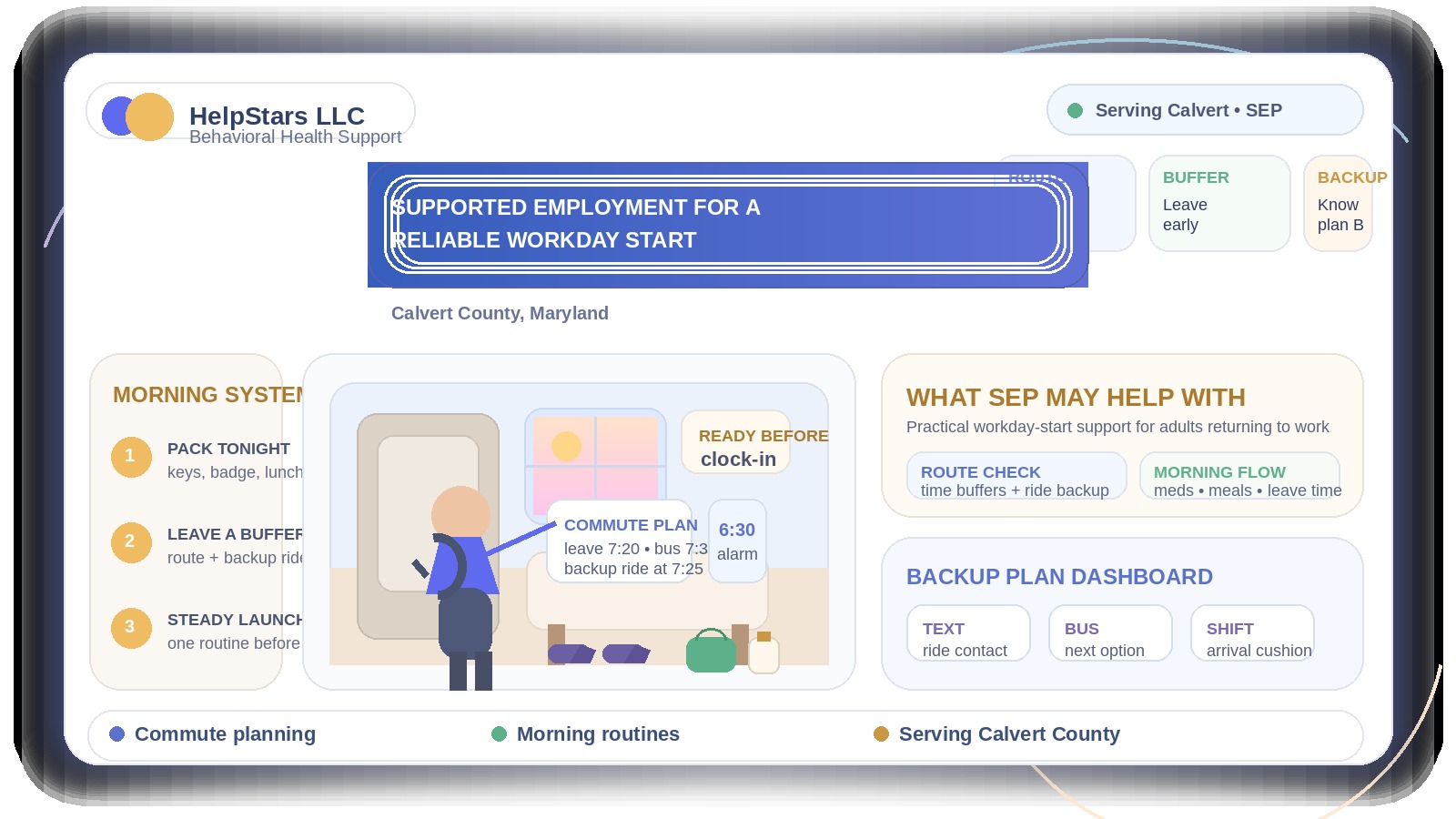
How Supported Employment Can Help Adults Build a Reliable Work Commute and Morning Routine in Calvert County, Maryland
For some adults, the hardest part of returning to work is not the interview and it is not even the job itself. It is the stretch of time before clock-in. The alarm goes off. Medication timing has to line up. Clothes have to be ready. Breakfast gets skipped. A ride falls through. Traffic feels unpredictable. One small delay creates panic, and then the whole plan starts to feel fragile.
That is one reason supported employment can matter. For adults in Calvert County, Maryland, a Supported Employment Program (SEP) may help turn a stressful, improvised workday start into a more repeatable routine. The service is not only about job searching. It can also help adults think through the practical systems that make showing up possible, especially when mental health challenges are affecting energy, focus, confidence, or consistency.
HelpStars LLC serves adults and families across Southern Maryland with compassionate behavioral health support tied to real life. When a person wants to work but keeps getting stuck on transportation, timing, or morning follow-through, structured employment support may be a practical next step to explore.
Why the Hour Before Work Often Determines the Whole Day
Many adults are fully capable of doing the job once they arrive. The problem is everything that has to happen first. A work routine can break down long before someone reaches the building.
That pressure may look like:
- waking up late because sleep has been inconsistent,
- forgetting what time to leave for the route or drive,
- feeling overwhelmed by packing lunch, paperwork, or work items,
- missing a bus, ride, or transfer and not having a backup plan,
- becoming anxious enough in the morning that leaving home feels harder than expected, or
- starting the day in such a rush that concentration drops before the shift even begins.
These struggles do not automatically mean someone is unmotivated or not ready. Often, they mean the person needs a more workable system around the transition from home to work.
What Supported Employment Can Help Organize Before the Job Day Starts
Supported employment is often most useful when it gets specific. Instead of giving broad advice like “be on time” or “get more organized,” SEP can help break the workday start into manageable pieces.
Depending on the person’s needs, support may include:
- mapping out what time the morning really needs to begin,
- building a step-by-step pre-work checklist,
- planning transportation routes and backup options,
- figuring out how long preparation tasks actually take,
- creating reminders for medication, meals, keys, ID badges, or work documents,
- practicing what to do if a delay happens, and
- adjusting the routine until it feels realistic instead of idealized.
That kind of support can reduce the all-or-nothing feeling many adults carry around work readiness. The goal is not a perfect morning. The goal is a routine that holds together often enough to support consistent employment.
A Commute Plan Is About More Than Getting From One Place to Another
Transportation problems are not always about distance. Sometimes they are about predictability, stress, and backup planning. A person may technically have a way to get to work and still feel one small change could ruin the day.
Supported employment can help adults think through practical questions such as:
- What time should I leave if traffic, transfers, or parking take longer than expected?
- What is my backup if the first ride falls through?
- What should stay packed the night before so I am not scrambling in the morning?
- How do I make the route feel familiar enough that it does not raise anxiety every day?
- What is the safest way to handle a late start without giving up on the whole shift?
Those details matter. When the commute feels less shaky, many adults have more mental energy left for the actual job instead of spending it all just trying to arrive.
Morning Routines Usually Work Better When They Are Built in Layers
Some adults try to fix work consistency by demanding a completely different life overnight. That approach often fails because it depends on willpower alone. A steadier approach is to build the routine in layers.
For example, a person might start with:
- setting out clothes, lunch items, keys, and work materials the night before,
- using one consistent wake-up sequence instead of multiple last-minute decisions,
- matching medication and breakfast timing to the actual departure schedule,
- leaving with a built-in buffer instead of aiming for the latest possible minute, and
- keeping a simple backup script for days when stress rises fast.
SEP can help reinforce those steps until they become more automatic. For adults managing depression, anxiety, bipolar disorder, trauma-related stress, or other behavioral health challenges, that kind of repetition can be more helpful than generic encouragement.
A Calvert County Example: Wanting the Job but Dreading the Start of the Day
Imagine an adult in Calvert County who is ready to return to work after a mental health setback. The interview went well. The position itself feels manageable. But each upcoming shift brings the same fear: what if the ride is late, what if the morning spirals, what if I start behind and never catch up?
In that situation, supported employment may help by narrowing the problem. The issue may not be work ability alone. It may be that the person needs a reliable launch plan. Support could focus on rehearsing the route, identifying a second transportation option, setting out essentials the night before, creating a clock-back system, and reducing how many choices have to be made before leaving home.
That changes the question from “Can I handle working?” to “What routine would make working more sustainable?” For many adults, that is a far more useful place to begin.
When This Kind of Employment Support May Be Worth Asking About
Adults and families may want to explore supported employment when someone:
- wants to work but keeps getting stuck on commute or schedule logistics,
- has the skills for a role but struggles with punctuality because mornings feel chaotic,
- becomes highly anxious about getting to work rather than the work itself,
- needs more structure around daily routines before employment feels stable, or
- is trying to return to work after a mental health disruption and needs practical follow-through support.
Asking early can help. Many adults benefit before repeated late arrivals, missed starts, or canceled opportunities shake confidence further.
Questions Adults in Calvert County Often Ask About Supported Employment
Is supported employment only for finding a job opening?
No. It can also help with practical steps that support job readiness and consistency, including routines, planning, and follow-through.
What if transportation is my biggest problem?
That can still be an important reason to ask about support. Transportation planning, route familiarity, and backup options can make a major difference in whether work feels sustainable.
Does needing help with morning routines mean I am not ready to work?
Not necessarily. It may simply mean you need a stronger system before the workday starts so your ability is not undermined by preventable stress.
Can supported employment fit alongside other mental health services?
Often, yes. Employment support may work alongside outpatient counseling, psychiatry, PRP, or other services depending on the person’s situation and recommendations.
Why Local Context Matters in Calvert County
Work routines are shaped by local realities. Adults in Prince Frederick, Lusby, Huntingtown, Dunkirk, North Beach, Chesapeake Beach, and nearby Calvert County communities may be balancing long drives, ride coordination, changing traffic patterns, family schedules, or limited flexibility if one part of the morning goes wrong. Employment support works better when it reflects the actual community the person is moving through, not a generic idea of work readiness.
That local fit can matter because the most effective routine is not the most ambitious one. It is the one a person can keep using across ordinary weeks.
Work Stability Often Begins Before Clock-In
Reliable employment is often built in the quiet steps that happen before the shift starts: charging the phone, laying out clothes, planning the ride, eating enough, taking medication on time, and leaving with a margin instead of a crisis. When those steps keep breaking down, the answer may not be more self-criticism. It may be more practical support.
HelpStars LLC provides compassionate behavioral health services for adults and families across Southern Maryland. For adults in Calvert County who want to work but need more structure around commute planning and morning follow-through, supported employment may be a helpful path toward steadier confidence and day-to-day consistency.