How PRP Services Can Help Adults Protect Housing Stability and Daily Independence in Waldorf, Maryland
The first sign that housing is becoming harder to maintain is not always dramatic. Sometimes it looks like unopened mail on the counter, a utility notice mixed into other papers, groceries that never made it onto the list, or a plan to call the landlord that keeps getting pushed to tomorrow. An apartment may still be there, but the routines that help protect it can start slipping long before anyone uses words like crisis.
For adults in Waldorf, Maryland, PRP services can be useful when mental health challenges are making everyday organization, community follow-through, and independent living tasks harder to manage consistently. A Psychiatric Rehabilitation Program (PRP) is designed to support practical recovery skills in day-to-day life. It does not replace therapy or psychiatry. Instead, it can help adults build more structure around the weekly tasks that keep housing, appointments, and routines from falling apart.
HelpStars LLC serves adults and families across Southern Maryland with compassionate behavioral health support that stays connected to real life. When someone wants more stability at home and in the community, PRP may be a meaningful step to explore.
Small Disruptions Can Put Housing at Risk Before Anyone Calls It a Crisis
Housing instability often grows from ordinary tasks becoming harder to track. A person may still care very much about staying housed and independent while also feeling less able to keep up with the small decisions that protect that stability.
That pattern may include:
- missing paperwork deadlines or forgetting which forms still need attention,
- falling behind on laundry, groceries, cleaning, or meal planning,
- losing track of appointment dates, prescription refills, or ride planning,
- avoiding phone calls, email, or mail because everything feels mentally crowded,
- having trouble restarting after one stressful week throws off the whole month, or
- feeling embarrassed enough about the backlog that it becomes even harder to ask for help.
These struggles do not mean someone lacks motivation. They often mean the person needs more practical support than talk-based treatment alone can provide between appointments.
What PRP Can Help Organize Week to Week
PRP is often helpful because it focuses on functioning, not only discussion. For adults in Waldorf and nearby Charles County communities, support may center on the routines that make community living more manageable and less overwhelming.
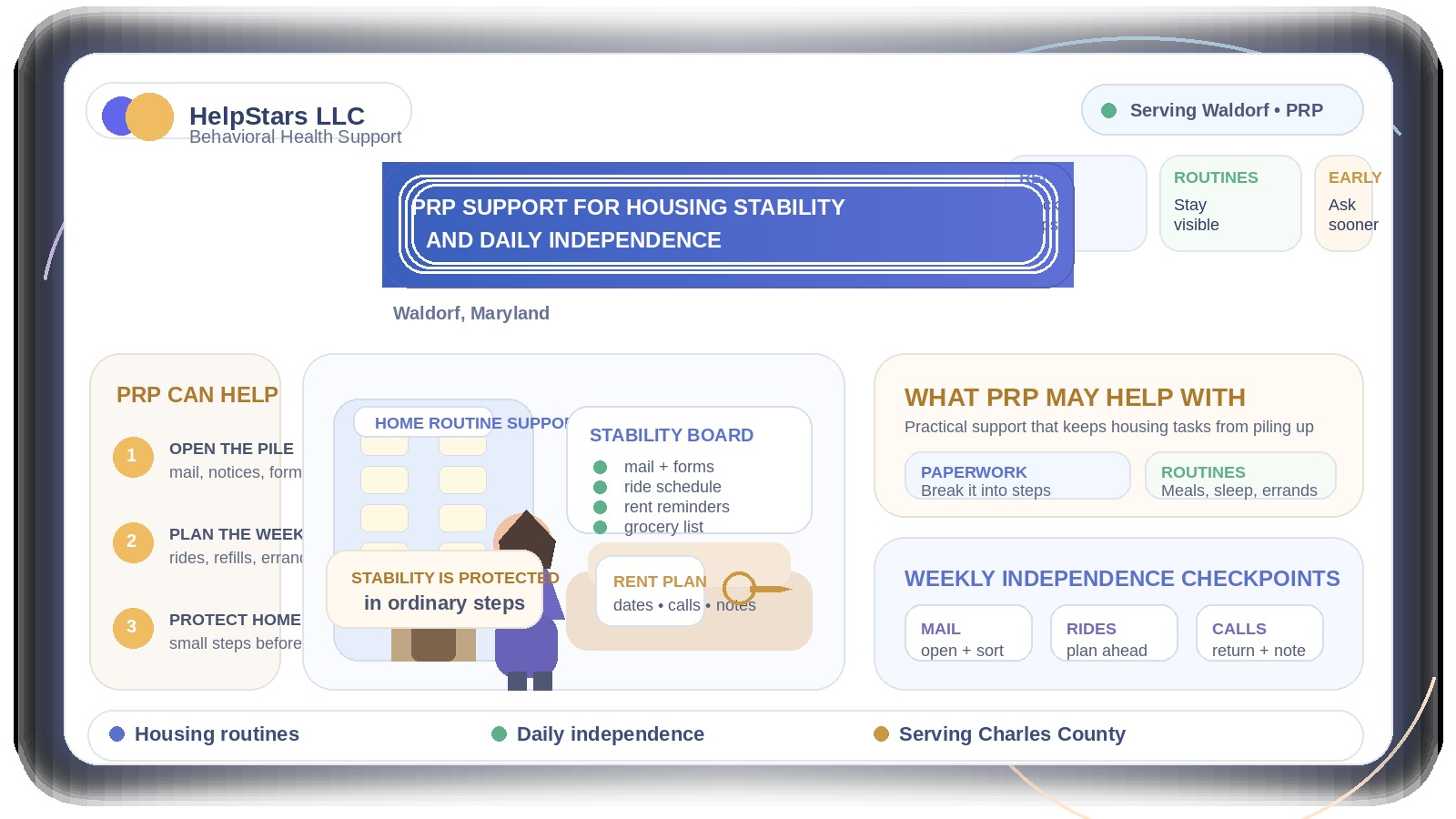
Depending on the individual situation, PRP may help with:
- creating a realistic weekly plan for errands, meals, appointments, and home responsibilities,
- building reminder systems for rent-related tasks, paperwork, or important calls,
- breaking larger tasks into smaller steps that feel possible to complete,
- strengthening transportation planning for therapy, psychiatry, pharmacy, or community appointments,
- practicing communication around landlord questions, service coordination, or support needs,
- rebuilding daily living habits such as sleep routines, grocery follow-through, and home organization, and
- staying connected to recovery goals after a setback instead of letting one missed step derail the entire week.
That practical structure can matter when a person is not looking for a dramatic intervention. They may simply want help staying on top of life in a steadier way.
Why PRP Is Different From Therapy Alone
Therapy can be an important place to process emotions, patterns, and stress. Psychiatry may help address medication needs and symptom monitoring. PRP fits differently. Its focus is often more concrete: how does the person get from understanding the problem to actually carrying out the next steps in daily life?
That distinction matters for housing stability. Someone may fully understand why unopened mail is piling up or why missed errands are becoming a problem and still have trouble turning insight into action. PRP can help bridge that gap by supporting routines, follow-through, and practical recovery skills in a more hands-on way.
For some adults, the issue is not knowing what matters. It is needing a clearer system for doing it consistently when stress, depression, anxiety, disorganization, or low energy get in the way.
A Waldorf Example: When the Apartment Is Still There but the System Is Slipping
Imagine an adult in Waldorf who is still living independently but has started falling behind in quiet ways. The kitchen is not unsafe, but groceries are inconsistent. The mailbox is full because opening letters feels overwhelming. A refill was delayed. A follow-up call about paperwork keeps getting postponed. The person wants to get organized, but each task now feels tied to three others.
In a case like that, PRP may help by narrowing the focus. Instead of trying to solve everything at once, support might start with one weekly checklist, one appointment plan, one mail-sorting routine, and one clear sequence for the next few steps. That kind of structure can reduce the all-or-nothing feeling that often makes people shut down.
The goal is not to make life perfect. The goal is to help the person protect stability before the pressure grows into missed obligations, larger conflicts, or avoidable housing problems.
What Adults and Families Often Watch For
Adults and family members often ask when it is time to consider more recovery-oriented support. PRP may be worth asking about when someone is:
- keeping housing but struggling to maintain the routines that support it,
- missing too many practical steps between therapy or psychiatry visits,
- needing more help with community living skills than weekly appointments currently provide,
- becoming more withdrawn, avoidant, or disorganized around daily responsibilities, or
- having trouble recovering from setbacks without outside structure.
Reaching out early can matter. Many adults benefit most before the situation becomes urgent, not only after daily life has already become much harder to repair.
Why Local Context Matters for Adults in Waldorf and Charles County
Daily stability is shaped by local realities. Adults in Waldorf, La Plata, White Plains, Bryans Road, and other Charles County communities may be balancing long commutes, childcare needs, ride coordination, benefit paperwork, treatment appointments, or family responsibilities at the same time. A recovery plan works better when it takes those real-world demands seriously.
That is one reason local behavioral health support matters. Community living skills are easier to strengthen when the plan reflects actual neighborhoods, transportation patterns, and weekly pressures rather than staying abstract. For people trying to protect housing and independence, realistic support is often more helpful than generic advice.
Common Questions About PRP and Housing Stability
Does needing PRP mean I am about to lose housing?
No. Many adults explore PRP because they want more support before their situation worsens. The goal can be prevention, not only response.
Can PRP help if the main problem is organization?
Yes. PRP may be helpful when disorganization, avoidance, low motivation, or stress are making ordinary responsibilities harder to manage consistently.
Is PRP only for one diagnosis?
No. PRP is generally focused on recovery support, functioning, and practical life skills rather than being limited to one single experience or symptom pattern.
Can someone use PRP along with counseling or psychiatry?
Often, yes. PRP can complement other outpatient behavioral health services by helping adults carry treatment goals into everyday routines and community tasks.
Stability Is Often Protected in Ordinary Moments
Housing stability is rarely built by one big decision. More often, it is protected through small repeated actions: opening the mail, keeping the appointment, planning the ride, restocking the kitchen, returning the call, and restarting after a hard week instead of giving up on the month. When those actions become harder to manage alone, extra support can make a real difference.
HelpStars LLC provides behavioral health support for adults and families across Southern Maryland, including services that strengthen recovery, daily functioning, and community stability. For adults in Waldorf and surrounding Charles County communities, PRP may be a practical next step when independent living feels important but harder to maintain than it used to.