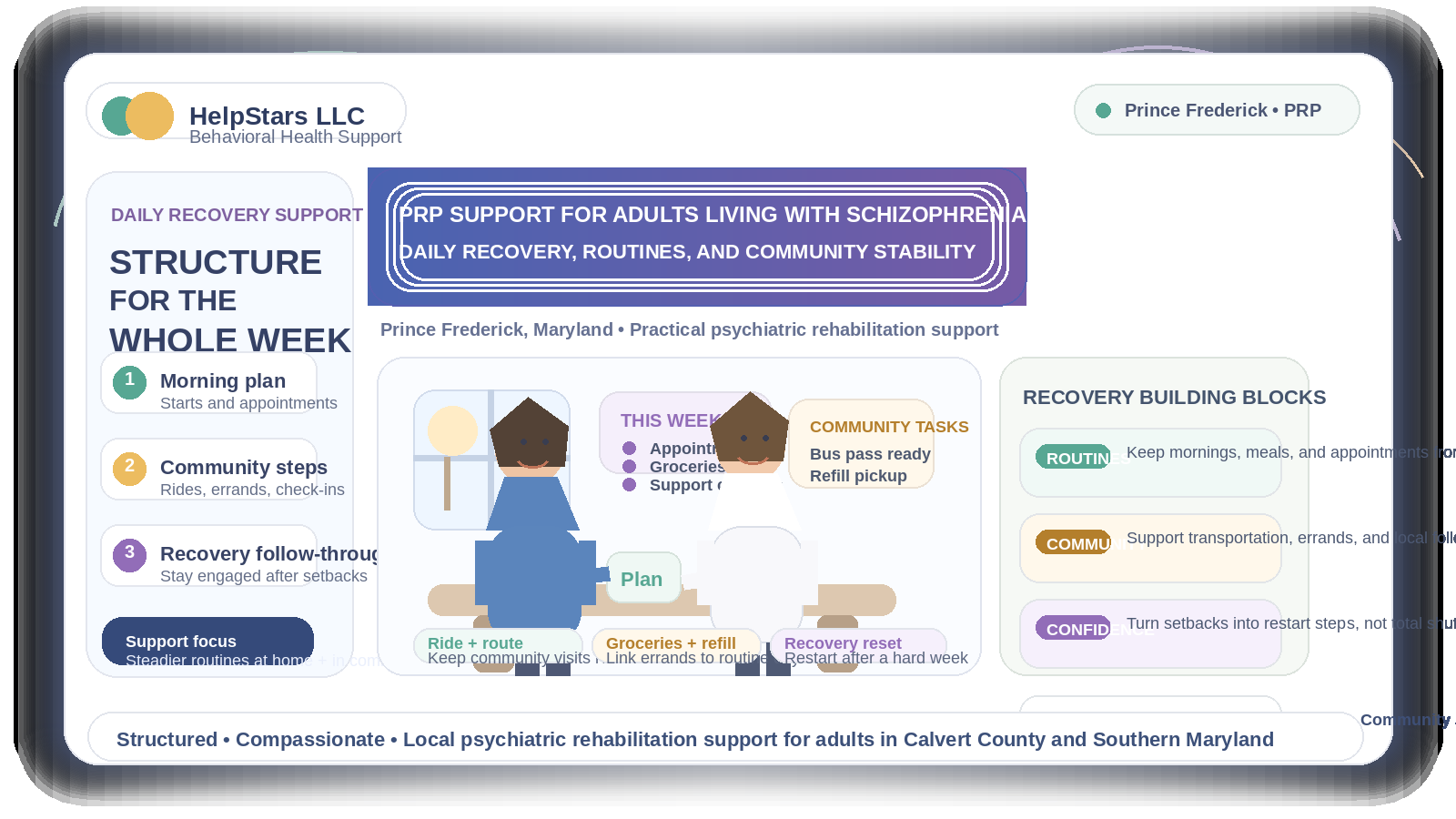
How PRP Can Support Daily Recovery for Adults Living With Schizophrenia in Prince Frederick, Maryland
Recovery is not only measured by whether someone makes it to an appointment. Often, it shows up in quieter ways: getting out the door on time, answering an important call, remembering a plan for the week, following through on groceries or prescriptions, or staying connected to the people and places that help life feel stable. For adults living with schizophrenia in Prince Frederick, Maryland, those day-to-day steps can be where progress feels most meaningful and where support is most needed.
A Psychiatric Rehabilitation Program, often called PRP, is designed to strengthen daily functioning and community stability. It does not replace therapy, psychiatry, or crisis services. Instead, it can add practical, recovery-focused support for adults who need more structure between clinical visits. When symptoms, stress, disorganization, social withdrawal, or routine disruption are making ordinary responsibilities harder to manage, PRP may become an important part of a larger behavioral health plan.
At HelpStars LLC, local behavioral health support is centered on compassionate care, realistic goals, and progress that fits real life in Southern Maryland communities.
When the Week Starts Narrowing
Schizophrenia can affect daily life in different ways from person to person. Some adults are mainly trying to stay organized and consistent. Others are working through changes in motivation, concentration, energy, confidence, or social comfort. Family members may notice that a loved one wants stability but keeps losing ground in the same places every week.
Common signs that more day-to-day recovery support may help include:
- Missing appointments because planning, reminders, or transportation keep breaking down
- Having trouble keeping up with meals, sleep, hygiene, errands, or household routines
- Feeling increasingly isolated from family, work goals, school, or community activities
- Starting tasks but struggling to finish them without structured support
- Losing confidence after setbacks and having difficulty restarting the week
- Needing more practical follow-through than weekly counseling alone can provide
That does not automatically mean someone needs inpatient care or a major treatment change. It may simply mean the current support plan is not giving enough help in the hours where everyday decisions actually happen.
What PRP Support May Focus On
PRP is practical by design. Instead of centering only on symptoms in a counseling office, it often focuses on how a person manages community life, routines, goals, and recovery tasks across the week. For adults living with schizophrenia in Calvert County, that can make support feel more usable and less abstract.
Depending on the person’s needs, PRP services may help with:
- Building a simple weekly routine for meals, sleep, appointments, and responsibilities
- Using calendars, reminder systems, or checklists to stay on track
- Preparing for psychiatry visits with questions, concerns, and follow-up steps
- Strengthening community-living skills such as transportation planning, communication, and organization
- Re-engaging with meaningful goals around education, volunteer activity, work readiness, or healthy social contact
- Breaking larger recovery goals into smaller, repeatable steps that feel manageable
The goal is not perfection. The goal is steadier participation in daily life.
How Support Can Look in Prince Frederick
In real life, recovery support often works best when it reflects actual community routines. A person in Prince Frederick may need help planning around ride availability, local appointment times, pharmacy pickups, family schedules, or the stress of managing several responsibilities at once. A strong PRP plan takes those details seriously.
For one adult, support may center on getting to appointments consistently and building a morning routine that reduces missed starts. For another, it may focus on organizing paperwork, practicing communication, or reintroducing manageable community activities after a period of withdrawal. Someone else may need help maintaining structure after a recent setback so one difficult week does not become a month of lost momentum.
That local, practical focus is one reason many families look for psychiatric rehabilitation support close to home. The more a plan matches a person’s real transportation routes, neighborhood routines, and daily responsibilities, the easier it can be to keep progress moving.
Where PRP Fits With Therapy, Psychiatry, and Family Support
PRP is often most useful as part of a broader outpatient behavioral health plan. Therapy may create space to process emotions, experiences, and coping patterns. Psychiatry may address medication questions and symptom monitoring. Family involvement may improve communication, boundaries, and support at home. PRP adds another layer by helping the person apply recovery goals in the flow of ordinary life.
That distinction matters. An adult may understand what needs to happen next and still have trouble following through without structured reinforcement. Knowing a plan is different from carrying it out on a hard day. PRP can help bridge that gap by turning treatment goals into concrete weekly actions.
What Families and Caregivers Often Want to Know
Families often ask whether needing PRP means a loved one is "failing" treatment. Usually, it means the opposite: the care plan is becoming more responsive to what daily life actually requires. More support is not a punishment. It can be a thoughtful way to protect stability before problems grow.
Caregivers may also wonder whether PRP is the same as therapy. It is not. Therapy generally focuses more on clinical conversation, emotional processing, and treatment insight. PRP is more centered on community functioning, routines, recovery habits, and practical follow-through.
Another common question is whether improvement has to look dramatic. It does not. Meaningful progress may be as simple as fewer missed appointments, better weekly organization, more consistent communication, or a stronger ability to recover after a stressful day.
Why Local Behavioral Health Access Matters in Calvert County
Behavioral health support is easier to sustain when it is accessible, understandable, and connected to the communities where people already live. Adults in Prince Frederick and nearby Calvert County communities often do better with care that recognizes local travel demands, family roles, and the pressure of balancing treatment with everyday responsibilities.
That is why local outpatient mental health services and psychiatric rehabilitation support can matter so much. Recovery rarely happens in a vacuum. It happens in homes, neighborhoods, calendars, and routines. Support that meets people there can make the next step feel more realistic.
A Steadier Week Is a Meaningful Goal
For adults living with schizophrenia, recovery does not have to begin with a dramatic turnaround. Sometimes it begins with a steadier Monday, a kept appointment, a completed errand, or a better plan for tomorrow. PRP can support those kinds of gains by helping adults build structure, stay engaged, and keep daily life from narrowing further.
If you are exploring PRP services, outpatient mental health care, or broader behavioral health support in Prince Frederick, Calvert County, or Southern Maryland, HelpStars LLC can help you understand what level of care may fit your situation and recovery goals.