How an Intensive Outpatient Program Can Help Adults Rebuild Follow-Through When Stress Starts Disrupting Daily Life in St. Mary’s County, Maryland
Sometimes people do not describe the problem as a crisis. They describe a pattern. A call from the therapist gets returned too late. A psychiatry follow-up gets pushed back again. Meals become inconsistent. Sleep drifts later. Plans that felt manageable a month ago now take so much effort that even simple tasks start falling apart. From the outside, it can look like someone is not following through. From the inside, it can feel more like life has quietly become too hard to organize.
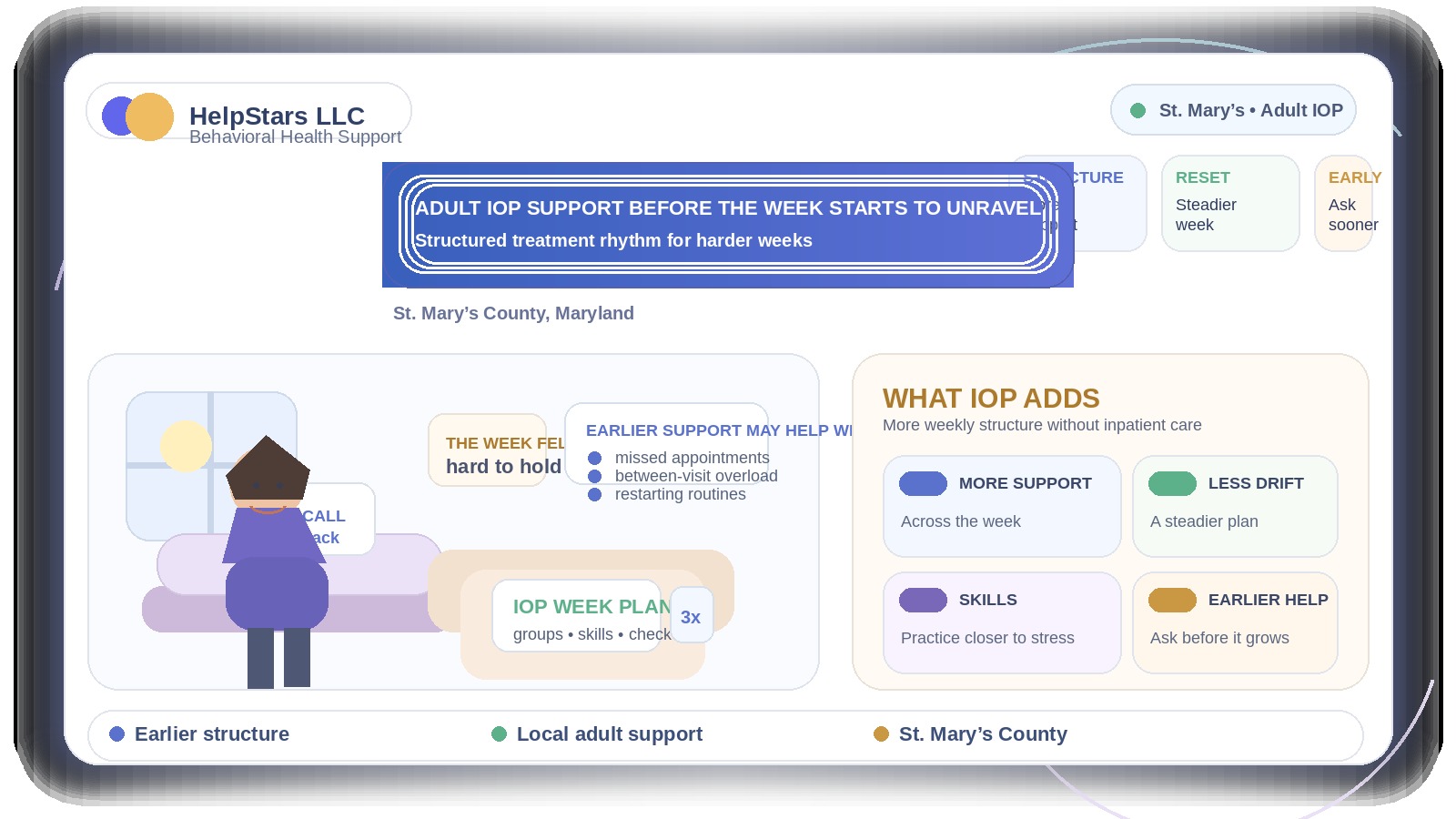
That is one reason an Intensive Outpatient Program (IOP) may be worth discussing. For some adults in St. Mary’s County, Maryland, weekly support is helpful but no longer enough structure to hold the week together. An adult mental health IOP can add more consistent therapeutic contact, a steadier routine, and more opportunities to practice coping skills before the situation slides into a more serious setback.
HelpStars LLC provides compassionate behavioral health support for adults and families across Southern Maryland. When someone needs more than occasional check-ins but does not require inpatient care, a structured outpatient option may become an important next step to explore.
The Pattern Many Adults Notice Before They Ask About IOP
Not every mental health decline looks dramatic at first. Sometimes the warning signs are functional. A person may still be getting through parts of the day while also noticing that their ability to stay organized, emotionally steady, and connected to treatment is slipping.
That may look like:
- Repeatedly canceling or missing appointments
- Feeling emotionally overloaded by routine responsibilities
- Needing much more time to complete basic tasks
- Withdrawing from people who usually help
- Having trouble applying coping skills outside of appointments
- Going back and forth between “I am fine” and “I am falling behind”
- Feeling stuck in a cycle of catching up instead of stabilizing
These experiences do not automatically mean a higher level of care is necessary. They can, however, signal that more structure could be useful. For some adults, the issue is not willingness. It is that the week has stopped having enough support built into it.
What an Intensive Outpatient Program Adds Beyond Weekly Appointments
Weekly counseling can be valuable, but it may leave long gaps between touchpoints when stress is rising quickly. An intensive outpatient program is designed to add more consistency without requiring a hospital stay. Instead of relying on one appointment to carry the whole week, IOP gives adults a more structured treatment rhythm.
Depending on the program, that added structure may include:
- Multiple therapeutic sessions each week
- More regular contact around coping, symptom management, and accountability
- A routine that keeps treatment active across the week instead of isolated to one day
- Group-based learning and support that helps reduce isolation
- More opportunities to notice what is helping and what is not
- A clearer bridge between emotional insight and day-to-day follow-through
For adults who feel as though they are losing traction between appointments, that extra structure may create enough momentum to help them re-engage more steadily.
Why Follow-Through Often Improves When the Week Has More Shape
Many adults already know what they are supposed to do. The problem is carrying it out while stressed, exhausted, anxious, depressed, or emotionally overwhelmed. IOP may help because it does not depend as heavily on one person holding everything together alone between widely spaced visits.
With more structured support, adults may have more chances to:
- Practice coping skills closer to the moment they are needed
- Notice stress buildup before it derails the next several days
- Reconnect to routines after missed steps instead of abandoning the week
- Stay more engaged with treatment goals
- Build a stronger sense of rhythm around recovery
This can matter when someone is not looking for a dramatic intervention. They may simply need a more supportive framework for getting through the week with less disruption.
A Realistic Example of the Kind of Problem IOP May Address
Imagine an adult in St. Mary’s County who is still trying to work, manage family responsibilities, or maintain housing, but lately keeps missing the same important steps. They mean to answer provider calls, but avoid the phone when overwhelmed. They want to attend counseling, but once the day becomes stressful, they cancel and tell themselves they will try again next week. Sleep becomes less predictable. The home routine starts to feel scattered. Each missed step increases shame, and that shame makes the next step feel even harder.
In a situation like that, IOP may help by replacing the all-or-nothing cycle with a steadier treatment cadence. The goal is not perfection. The goal is to reduce drift, increase support, and make it easier to stay connected before the disruption grows larger.
Who Might Want to Ask About Adult IOP in St. Mary’s County?
An intensive outpatient program may be worth asking about when someone needs more support than standard outpatient visits are providing, but does not appear to need inpatient care. Every situation is different, but adults may want to explore IOP when they:
- Feel their symptoms are affecting daily functioning more often
- Keep losing momentum between therapy or psychiatry appointments
- Need more structured support to stay engaged with treatment
- Want help before the situation escalates further
- Are having trouble balancing recovery with daily demands
- Need a stronger routine around emotional stabilization and coping practice
IOP is not a judgment that someone has failed at weekly care. It may simply be a better fit for the amount of support they need right now.
How IOP Can Work Alongside Other Behavioral Health Services
Adults in Southern Maryland often receive care across more than one service line. Intensive outpatient treatment may work alongside other supports depending on clinical recommendations, including outpatient counseling, psychiatric care, and additional recovery-oriented services. The key idea is coordination: helping treatment feel connected rather than fragmented.
For example, someone may already understand their triggers in counseling but still need more structure to stay engaged during a hard stretch. In that kind of situation, IOP may offer a stronger weekly container while the person continues building longer-term stability.
Questions Adults in St. Mary’s County Often Ask About IOP
Do I have to wait until things become a crisis?
No. Many adults explore structured outpatient care because they want more support before daily functioning deteriorates further.
Is IOP only for people leaving the hospital?
No. Some adults consider IOP because weekly care is no longer enough support, even if they have not recently been hospitalized.
Does needing IOP mean I am not trying hard enough?
Not at all. It may mean your current level of support no longer matches the pressure you are carrying.
Can IOP help if the main issue is inconsistency rather than one dramatic event?
Yes. For some adults, the concern is not one single crisis but a pattern of emotional overload, missed follow-through, and difficulty staying connected to care.
Why Local Access Matters in St. Mary’s County
For adults in Leonardtown, Lexington Park, California, Great Mills, Mechanicsville, and nearby communities, treatment is easier to use when it fits real life. Transportation, family responsibilities, work demands, and energy levels can all affect whether someone actually follows through with care. Local behavioral health support matters because structure is more realistic when it is connected to the community a person is already trying to navigate.
That local context can make a meaningful difference when someone is trying to rebuild consistency instead of starting over from scratch.
More Structure Can Be a Practical Next Step
If daily life has started to feel harder to hold together, that does not always mean a person needs the highest possible level of care. It may mean they need more support than weekly appointments alone can provide right now. An intensive outpatient program can offer a more structured path for adults in St. Mary’s County who want help staying engaged, rebuilding follow-through, and protecting stability before stress takes over more of the week.
HelpStars LLC provides professional and compassionate behavioral health services for adults and families across Southern Maryland. For individuals who may benefit from more structured outpatient support, asking about the right next step can be a practical and hopeful place to begin.