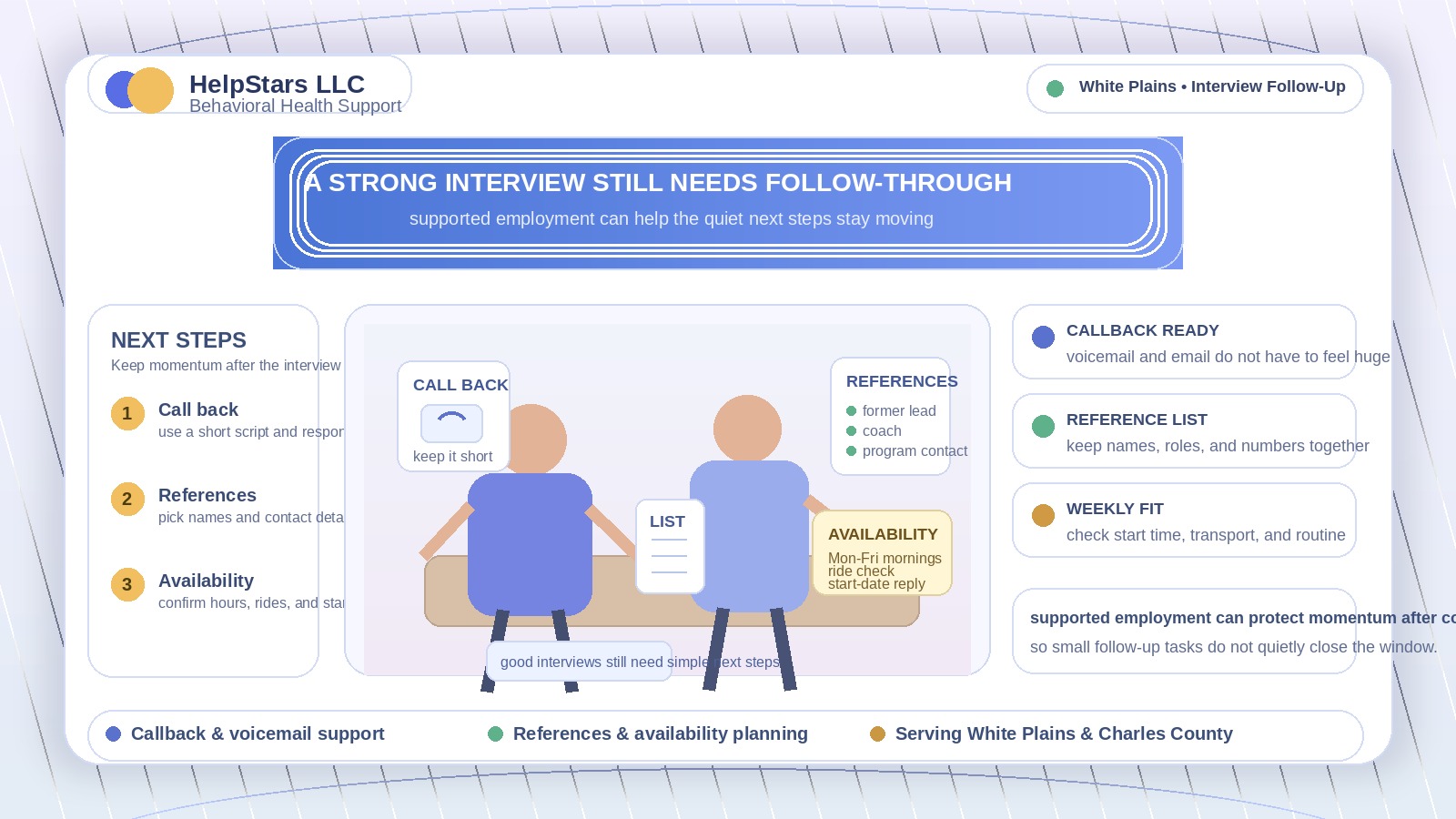
A Strong Interview Still Leaves Quiet Steps To Finish: Supported Employment for Adults Serving White Plains, Maryland
Some job searches do not stall because the interview went badly. They stall because the interview went well enough to create a new kind of pressure. The person gets through the hardest public moment, says the right things, answers the questions, and leaves thinking maybe this opportunity could work. Then the quieter follow-up steps begin, and that is where the momentum can suddenly thin out.
For adults seeking supported employment serving White Plains, Maryland, that after-interview period can matter more than people expect. A missed callback, an unfinished reference list, uncertainty about availability, or anxiety about sending one short follow-up message can quietly interrupt a promising lead. A supported employment program can help adults organize those next steps so a strong conversation does not get lost in the gap between interest and follow-through.
HelpStars LLC supports adults across Southern Maryland with practical behavioral health services, including employment-focused support. When the interview is over but the process still feels hard to carry alone, structured guidance may help keep a good opportunity moving.
Why the Job Search Can Get Harder After a Good Interview
People often assume the most difficult part of the hiring process is the interview itself. For many adults, that is true. But for others, the bigger challenge starts after the visible performance is over. Once the person is back home, they may need to track voicemail, watch email closely, send a brief thank-you note, confirm their availability, gather references, or clarify small details that suddenly feel much bigger than they should.
Those tasks can look simple from the outside. In real life, they may land during a week that already includes appointments, transportation planning, family responsibilities, fatigue, and the emotional aftermath of trying hard to present well. The person may want the job and still feel unexpectedly stuck on the small next actions that help the process continue.
That is one reason supported employment can be valuable. It helps make the quieter parts of the job process more structured, visible, and easier to follow through on.
What the After-Interview Stall Often Looks Like
Momentum after an interview does not usually disappear in one dramatic moment. It often fades through small delays and second-guessing. A person may:
- keep replaying the interview instead of completing the next step,
- wait too long to return a call because they want to sound more prepared,
- put off sending references because choosing who to ask feels awkward,
- avoid checking email because they are afraid of good news and pressure at the same time,
- freeze when asked to confirm hours, start-date flexibility, or transportation details, or
- tell themselves they will respond later and then realize the window is getting smaller.
These are not necessarily signs that the person does not want to work. They may be signs that the follow-up stage needs more support than outsiders realize.
A White Plains Example: The Interview Went Better Than Expected, Then Everything Slowed Down
Imagine an adult serving White Plains, Maryland who attends a promising interview after weeks of building up the courage to apply. The conversation goes better than expected. They connect with the interviewer, explain their strengths clearly, and leave feeling something they have not felt in a while: cautious momentum.
The next day, however, the task list changes shape. A voicemail needs a response. Two references need to be confirmed. The person is asked to restate availability and think through how morning transportation would work if an offer moves quickly. None of those steps are impossible, but together they feel heavier than they look. By the time the person decides how to respond, anxiety and overthinking have already started slowing the process down.
That is the kind of situation where supported employment for adults serving White Plains, Maryland can help. The support is not about repeating generic encouragement. It is about helping the person translate one good interview into the next concrete actions.
How Supported Employment Can Help During the Follow-Up Stage
Supported employment is often useful not only before the interview, but also in the quieter steps that follow it. Depending on the person’s needs, support may help with:
- organizing a simple follow-up checklist after an interview,
- preparing short callback or voicemail language so returning contact feels easier,
- reviewing reference options and identifying who feels appropriate to ask,
- thinking through transportation, timing, and weekly availability before responding,
- breaking employer paperwork into smaller, more manageable pieces, and
- reducing the delay that happens when every next step starts feeling high-stakes.
The goal is not to pressure the person into perfect performance. The goal is to help a real opportunity stay active long enough for it to become workable.
Three Signs the Post-Interview Phase May Need More Support
- The person does better in the interview than in the follow-up. They can show up and connect, but the next steps become harder once structure drops off.
- Practical details start feeling emotionally loaded. A simple reply about references, start date, or availability begins to feel much bigger than it is.
- Delay keeps replacing momentum. The opportunity does not vanish because of one major problem. It fades because several small steps never become simple enough to complete.
These patterns do not mean the person is not ready for work. They may mean the process needs more structured support around timing, organization, and confidence after the interview itself.
Why the Quiet Steps Matter So Much
The hiring process is often judged by its visible moments, but many opportunities are decided by what happens in between. Returning a message, sending a document, clarifying availability, and confirming logistics are all part of demonstrating readiness. When those tasks collide with anxiety, executive overload, or an already-strained week, a promising opening can start to feel slippery.
That is why supported employment can make a difference even after someone has already proven they can interview. Keeping the process moving requires structure after the conversation, not just preparation before it.
Why This Matters in Charles County
Adults serving White Plains, Waldorf, La Plata, Bryans Road, Hughesville, Indian Head, Port Tobacco, and nearby Charles County communities often juggle work goals alongside transportation planning, appointments, family responsibilities, and day-to-day mental health recovery. In that kind of week, a strong interview is important, but it is not the whole task.
That is part of why supported employment serving White Plains, Maryland can matter. Support may help adults hold onto momentum through the quieter steps that connect a promising interview to an actual next opportunity.
Questions Adults Often Ask
What if I did well in the interview but now feel stuck on the follow-up?
That can be an important part of the employment process, not a small failure. Supported employment may help break the next steps into simpler actions.
Do I need support only before I apply for jobs?
Not necessarily. Some adults need the most help after contact has already started, when references, calls, availability, and paperwork begin to pile up.
What if I am worried I will say the wrong thing when I call back?
That is a common concern. Structured support can help make the response feel more prepared and less overwhelming.
Can small delays really affect a good opportunity?
Sometimes, yes. That is why making the quieter steps more visible and manageable can matter so much.
One Good Interview Deserves a Better Chance To Keep Moving
A strong interview should not have to carry the whole process by itself. When the next steps stay too quiet, too scattered, or too emotionally loaded, real opportunities can stall for reasons that look small but feel heavy in the moment.
HelpStars LLC supports adults across Southern Maryland with practical behavioral health services, including employment-focused support. For adults seeking supported employment serving White Plains, Maryland, structured follow-up support may help turn one promising conversation into a more realistic path forward.