A Simple Errand Should Not Empty the Rest of Your Day: Outpatient Mental Health Counseling for Adults in Charlotte Hall, Maryland
Some adults are not avoiding life because they do not care about it. They are backing away because ordinary tasks take more out of them than anyone else can see. A grocery stop, school pickup, pharmacy run, quick family visit, or short appointment may look manageable from the outside. But once they get back home, the rest of the day feels harder to restart. The bag gets set down, the shoes stay on longer than usual, the phone goes unanswered, and whatever was supposed to happen next quietly falls away.
For adults in Charlotte Hall, Maryland, outpatient mental health counseling can help when small outings seem to use up far more emotional energy than they should. The issue is not always the errand itself. Sometimes it is the buildup before leaving, the alertness during the task, and the recovery cost afterward that together make one ordinary trip feel like the only thing the day can hold.
HelpStars LLC provides compassionate behavioral health support for adults and families across Southern Maryland. When basic everyday plans keep leaving someone depleted, irritable, shut down, or unexpectedly tearful afterward, counseling may offer a more useful place to understand the pattern than self-criticism alone.
When the Task Ends but the Body Does Not
Many adults describe this pattern in a very specific way: the errand ends, but the nervous system does not. The body may still feel keyed up, mentally noisy, socially braced, or oddly heavy long after the task is over. Even a successful outing can leave someone needing recovery time they did not plan for.
That may sound like:
- “I did the thing, but now I cannot do anything else,”
- “It was only one stop, so I do not understand why I feel wrung out,”
- “I look fine while I am out, then I crash once I get home,”
- “I keep choosing between one errand and the rest of my day,” or
- “People think I am functioning because the task got done, but they do not see what it cost.”
That experience can show up with anxiety, depression, trauma-related stress, burnout, emotional overload, grief, chronic stress, or a mix of several things at once. It can also make adults second-guess themselves because the outside task looks too small to justify the inside impact.
Why Ordinary Outings Can Feel So Expensive
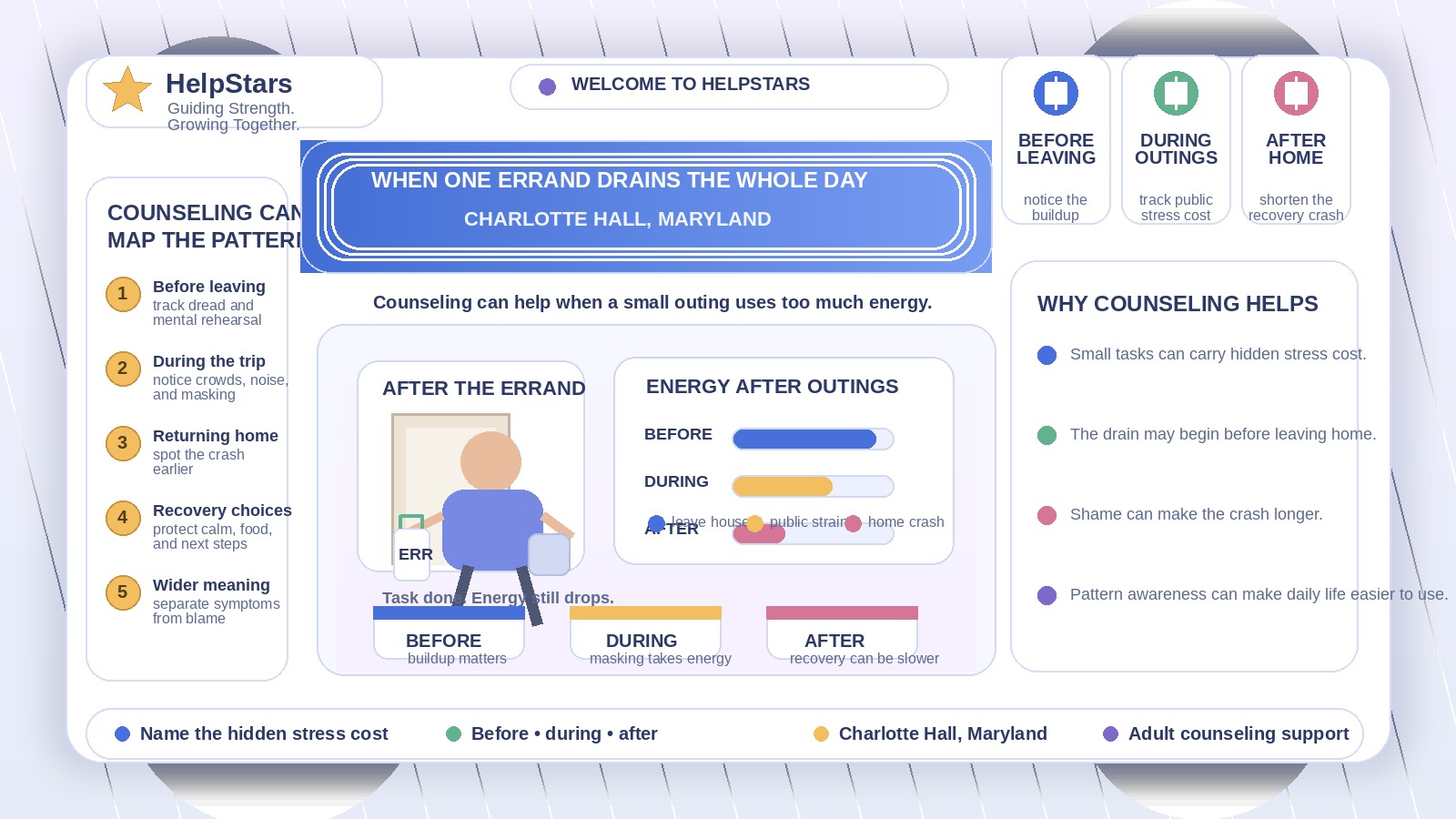
Sometimes the draining part starts before the person even leaves. There may be mental rehearsal, dread, overstimulation, fear of running into someone, pressure to act normal, uncertainty about timing, or the effort of organizing several simple steps in the correct order. Other times the person gets through the outing adequately and does not feel the crash until they are back in the car or home again.
The point is not to turn every errand into a diagnosis. The point is to notice that the stress cost may be hiding in several places:
- anticipation before leaving,
- staying regulated while out in public,
- masking anxiety or irritability around other people,
- navigating noise, decisions, waiting, or social contact, and
- trying to recover quickly enough to continue the day afterward.
When those pieces stack together, one short outing can consume the energy someone needed for meals, chores, work tasks, parenting, or follow-through at home.
A Charlotte Hall Example: The Pharmacy Run Was the Whole Day
Imagine an adult in Charlotte Hall, Maryland who plans a simple afternoon: pick up a prescription, stop for one household item, and come back home to finish two more tasks. The plan looks reasonable. They do leave the house. They complete the stop. Nothing visibly dramatic happens.
But on the way home, their jaw is tight, their thoughts are loud, and their energy feels used up. Once back inside, they sit down “for a minute” and lose the next ninety minutes. Dinner feels less manageable. A message from a family member goes unanswered. The second task on the list quietly disappears. By evening, the person starts telling themselves they should have handled the day better because it was only one errand.
In counseling, the conversation can become more accurate. Was the drain coming from depression, anxiety, overstimulation, resentment, grief, trauma-related vigilance, isolation, sleep deprivation, or months of already running low? The answer may not be simple, but it is often more specific than “I guess I am just lazy.”
What Counseling Can Help Untangle
Outpatient mental health counseling can help adults look at the full sequence around these crashes instead of judging only the end result. Depending on the individual situation, support may help with:
- identifying whether the hardest part is before, during, or after the outing,
- understanding how anxiety, depression, trauma stress, or burnout may be changing tolerance for ordinary tasks,
- building better transition routines before returning home,
- reducing the shame that makes recovery slower after the task is over,
- recognizing patterns around noise, crowds, waiting, family contact, or decision overload, and
- making daily plans that reflect current capacity while treatment helps expand it over time.
The goal is not to accept exhaustion as permanent. It is to understand why something small keeps having such a large after-effect.
Two Questions That Often Open the Pattern Up
- What part of the outing is actually costing the most? The answer is not always the public part. For some adults it is getting ready. For others it is masking while out. For others it is the internal crash once they are safe again.
- What always seems to disappear afterward? Meals, patience, concentration, chores, social replies, and evening routines often reveal the real cost more clearly than the errand itself.
Those questions can shift the conversation from self-blame to pattern recognition.
Why This Matters in Everyday Life
Adults in Charlotte Hall and nearby St. Mary’s County communities are not doing these tasks in isolation. Outings are woven into caregiving, commuting, refill timing, work obligations, family life, paperwork, and household maintenance. If one basic stop keeps wiping out the hours around it, that changes more than productivity. It changes confidence, predictability, and willingness to try again tomorrow.
That is one reason this pattern matters clinically. A person does not need to be in visible crisis before a repeated drain on daily functioning deserves attention.
Questions Adults Often Ask
Does this only happen to people with severe anxiety?
No. Anxiety can be part of it, but so can depression, trauma-related stress, burnout, grief, emotional overload, or prolonged mental fatigue.
What if I can complete the outing but always crash afterward?
That still counts as a real problem. Success on the visible task does not erase the cost to the rest of the day.
Should I wait until I am avoiding errands completely before seeking help?
No. Many adults benefit from support earlier, while they are still getting some things done but noticing the effort and fallout are getting worse.
Can counseling fit alongside other behavioral health services?
Yes. Depending on the person’s needs, counseling may work alongside medication management, psychiatric evaluation, PRP, family support, or other outpatient behavioral health care.
Daily Life Should Not Keep Shrinking Around Small Tasks
If basic outings keep taking more from you than they seem to take from everyone else, that does not mean you are weak or failing at adulthood. It may mean your nervous system, mood, stress load, or emotional reserves need more care than they are currently getting.
HelpStars LLC supports adults and families across Southern Maryland with compassionate behavioral health services. For adults in Charlotte Hall, Maryland who feel like one simple errand can quietly empty the rest of the day, outpatient mental health counseling may help make the pattern clearer, the recovery shorter, and daily life more usable again.